Author: martina

AIUCD25 held in Verona from June 11 to 13 2025

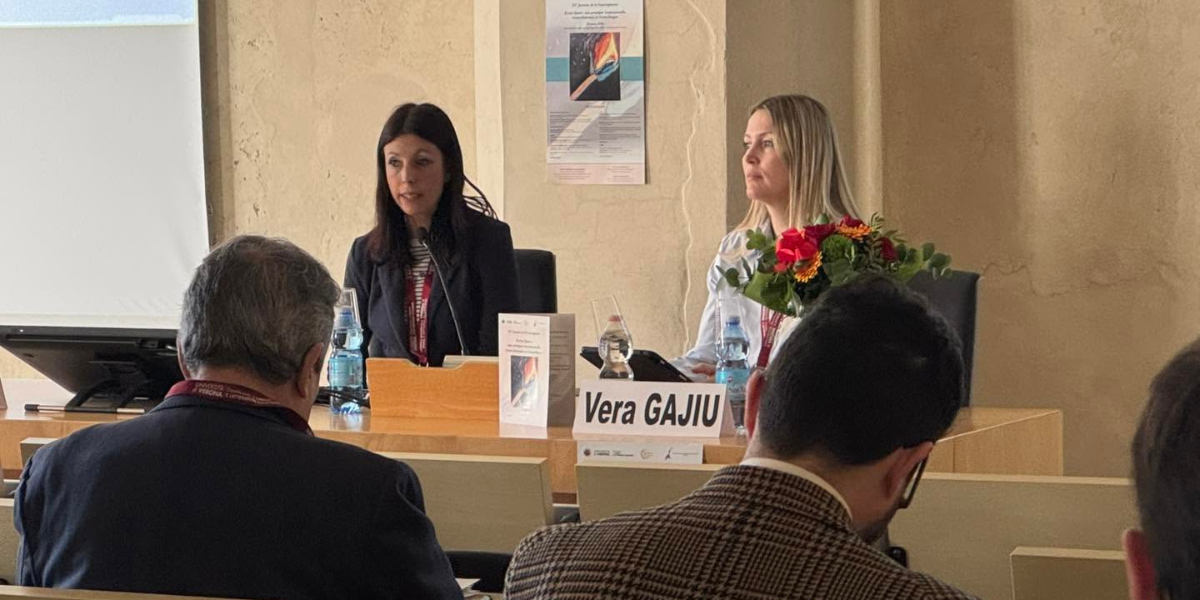
AIUCD 25 in Aula Magna

The 14th AIUCD Annual Conference 2025 concluded today, June 13, 2025, after three intense days that brought the Santa Marta campus in Verona to life. From June 11 to 13, we had the opportunity to immerse ourselves in the challenges and opportunities of Digital Humanities in the age of Artificial Intelligence, with a special focus on “Diversity, Equity, and Inclusion.”

The morning of Wednesday, June 11 opened with greetings from Marina Buzzoni, President of the Italian Association for Digital Humanities and Digital Culture (AIUCD), Roberta Facchinetti, Director of the Department of Foreign Languages and Literatures at the University of Verona, Massimo Salgaro, Project Manager of the “Inclusive Humanities” Project of Excellence, and Simone Rebora and Marco Rospocher, General Chairs of AIUCD2025.

The lively poster session, preceded by the Poster Madness, then captured the attention of all conference participants. Held at the end of the first day, it was punctuated by the sound of a gong: each participant had 120 seconds and one slide to spark the audience’s curiosity and introduce their poster. In this way, 37 posters and as many presenters followed one another. The poster exhibition then took place at Santa Marta, accompanied by an aperitif.

On Thursday, June 12, the conference opened with the first keynote speaker, Evelyn Gius, with a talk entitled “Measuring What Matters – or, the Temperature of Literary Texts.” During the subsequent parallel sessions, we were immersed in stimulating discussions and innovative presentations aimed at exploring the future of Digital Humanities. During the General Assembly of members, the venue of the 15th AIUCD Annual Conference was announced: it will be held at the University of Cagliari from June 3 to 5, 2026.

Friday, June 13 featured the second keynote, Viviana Patti, who presented Absit iniuria verbis. During the closing ceremony, the Gigliozzi Awards were finally presented for two oral presentations and two posters:

Oral Presentation Section:

Mariangela Giglio (Università di Bologna), Metodologie computazionali per l’organizzazione di archivi nati digitalmente

Gianluca Pavani (Università degli Studi di Roma “Tor Vergata”), Human–LLM Synergy in Higher Education Publishing: Two ChatGPT Use Cases within Editorial Pipelines

Poster Section:

Davide Bordon (Università di Ljubljana), Predicting Grammatical Cases in Slovenian Varieties in Italy: A Use Case from the LORIS 1.1 Language Assistant

Rita Gramellini (Università di Bologna), Linguistica dei corpora e informatica umanistica per la valorizzazione plurilingue del patrimonio culturale: implementazione del progetto

We extend our heartfelt thanks to all participants, speakers, the organizing staff, and the partners who made this extraordinary event possible.

Sunday, June 22 the Third Food talk

Food Talks: third event organized by the Department of Foreign Languages and Literatures (University of Verona) in collaboration with Cinelà – Festival del Cinema Africano.

On Sunday, June 22 at 7:30 p.m., at the Cinema Teatro di San Massimo (Via Brigata Aosta 6, 37139 Verona), Professors Chiara Battisti and Sidia Fiorato will present a new event in the Food Talks series, this time dedicated to Nigerian and Senegalese culture and cuisine.
Aminat Emma Badmus will speak on The Knowledge of Tradition: Food as an Expression of Identity and Culture, analyzing So Long a Letter by Mariama Bâ and Egusi Soup by Janice Okoh.

To follow, an aperitif with tastings of typical dishes from Senegal and Nigeria! A unique opportunity to reflect on literature, identity, and tradition… with flavor!

Food Talks: terzo appuntamento proposto dal Dipartimento di Lingue e Letterature Straniere (Università di Verona) in Collaborazione con Cinelà – Festival del Cinema Africano di San Massimo.

AIUCD 2025: Diversity, Equity, and Inclusion

AIUCD 2025 comes to Verona!
The 14th Annual Conference of the Italian Association for Digital Humanities and Digital Culture will take place from June 11 to 13, 2025 at the Santa Marta Campus, Via Cantarane 24, Verona.

Diversity, Equity, and Inclusion: Challenges and Opportunities for Digital Humanities in the Age of Artificial Intelligence” is this year’s theme—an unmissable opportunity to explore the frontiers of innovation and critical thinking in the field of Digital Humanities.
Organized by the Digital Arena for Inclusive Humanities (DAIH) of our department, the event is supported by the Verona Chamber of Commerce and the Municipality of Verona.

More information and the full program of the conference days are available at this link.

The 16th episode of Inclusioni is online

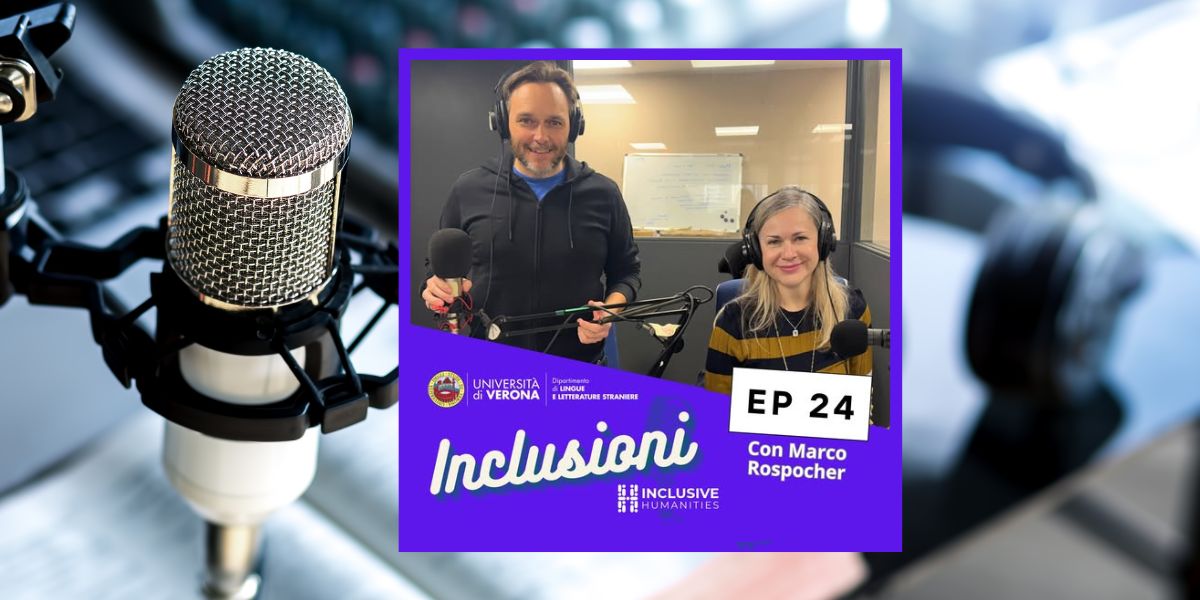
Reading is not necessarily a solitary experience: have you ever thought about joining a reading group? In the sixteenth episode of Inclusioni, the podcast channel of the Department of Foreign Languages and Literatures at the University of Verona, we introduce a new series of meetings dedicated to reading the classics, organized in collaboration between our department and the Municipal Library of Colognola ai Colli, in the province of Verona.

Paola Perazzolo, professor of French literature in our department, talks with Michela Battocchio, head of the Colognola ai Colli library and provincial coordinator of the AIB Veneto Working Group on Reading Groups. Together they present the two cycles of meetings planned for summer and autumn 2025 on the theme “The New Classics.” They also discuss how these initiatives can contribute to the university’s Third Mission by bringing academic knowledge into the local community and creating a virtuous link between citizens and the university, as well as how books can be a tool for openness of mind, inclusion, and cultural mediation.

To take part in the reading cycle “The New Classics,” visit this page. Enjoy listening – or rather… happy reading!

«Or ne vous semble plus estre chose merveilleuse que Ferrare soit ici» wraps up

Pubblico e cattedra presso il XXII Convegno internazionale

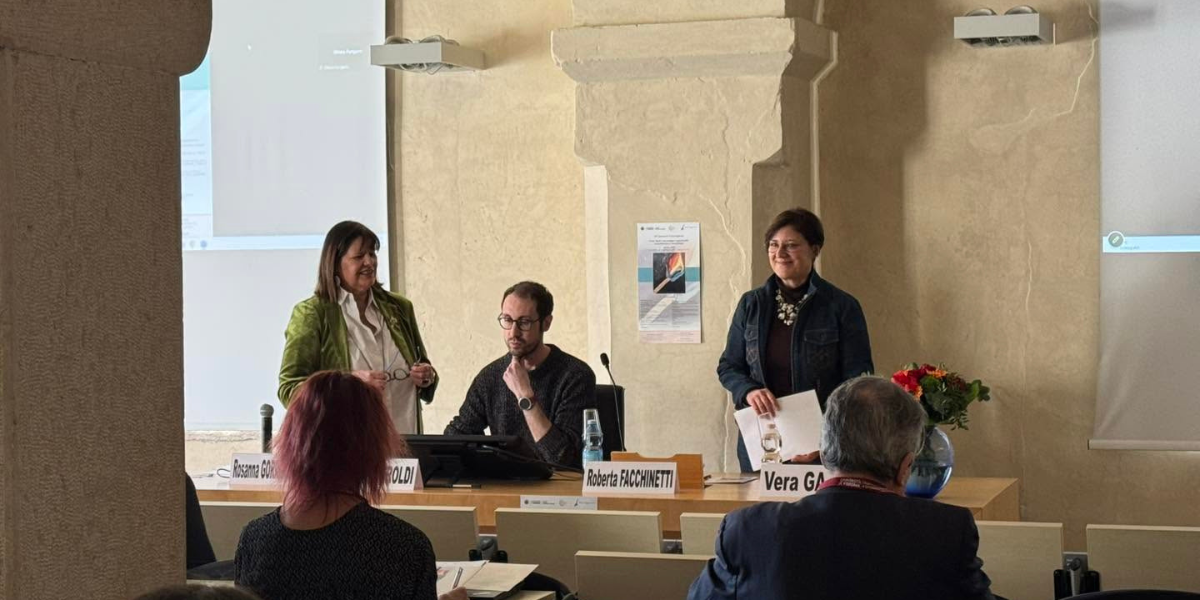
The 22nd International Conference of the French Renaissance Study Group, entitled “‘«Or ne vous semble plus estre chose merveilleuse que Ferrare soit ici»: penser, imiter et traduire l’Arioste et le Tasse en France concluded with great participation. The conference was held from May 29 to 30 at Palazzo Pompei, home of the Verona Natural History Museum.
The event also served as an important moment of reflection in memory of Elio Mosele, distinguished Rector of the University of Verona for the academic years 1999–2004, a scholar of French studies and President of the French Renaissance Study Group, who passed away prematurely.

The 22nd International Conference, organized and chaired by Professor Rosanna Gorris Camos of our department and by Daniele Speziari (University of Ferrara), offered highly engaging insights into the study of translations and major imitations of the works of Ariosto and Tasso in France, with a particular focus on translations of theatrical texts, Franco-Italian networks, and the materiality of texts.

Last event in the ЇЇ – Her: Dimensions of Ukrainian Womanhood series

The series of events ЇЇ – Her: Dimensions of Ukrainian Womanhood concluded with Ambassadors of Freedom: the Historical Experience of Ukrainian Women in International Politics and Diplomacy, focusing on a page of Ukrainian history that is often overlooked yet fundamental: the crucial role of Ukrainian women in international politics and diplomacy.
On Friday, May 30, Lecture Hall T.10 welcomed Alla Shvets, Deputy Director of the Ivan Franko Institute and a leading figure in the Association for Research in Women’s History, who masterfully illustrated how Ukrainian women have acted as true ambassadors of freedom in the international political and diplomatic arena. Her incisive analysis highlighted the historical contribution of female figures who have shaped and represented Ukraine on the world stage.

Thanks to this series of meetings—made possible by the dedication of Professors Daniele Artoni and Anna Giust from our department and the careful organization of our doctoral students Diana Bota and Khrystyna Yordan—we had the opportunity to gain a closer understanding of the true essence of Ukraine, through the stories and the fundamental role of its women.