Author: martina

The 22nd International Conference of the French Renaissance Study Group

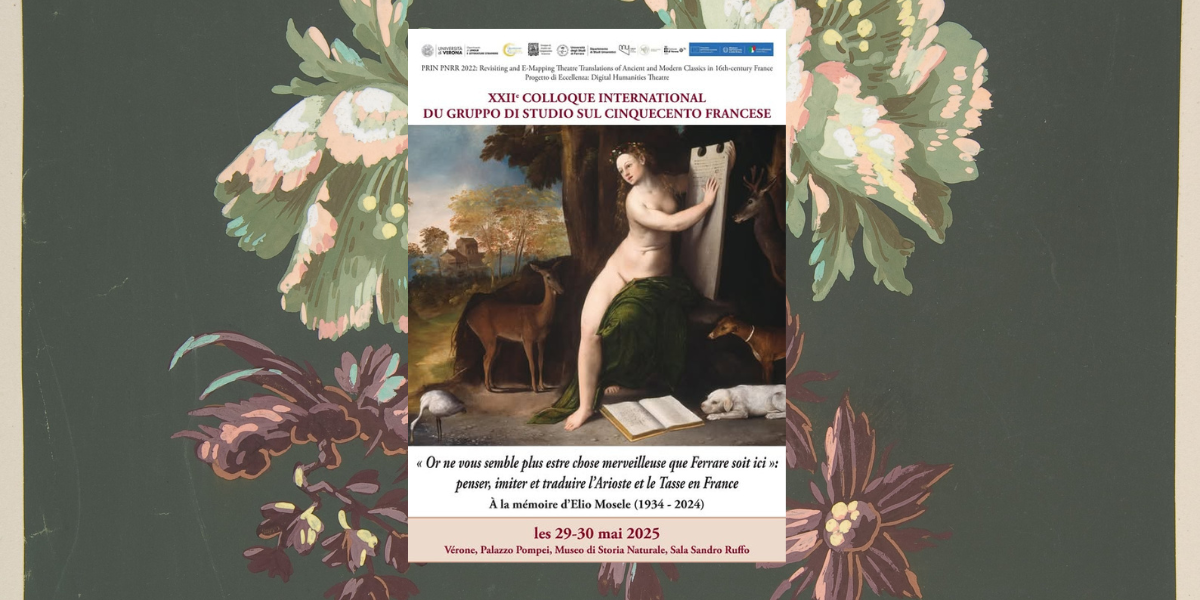
The international conference ‘Or ne vous semble plus estre chose merveilleuse que Ferrare soit ici’: Thinking, Imitating, and Translating Ariosto and Tasso in France will take place from May 29 to 30 at Palazzo Pompei, the seat of the Verona Natural History Museum (Lungadige Porta Vittoria 9, 37129 Verona). The event is organized in memory of Elio Mosele, distinguished Rector of the University of Verona, a scholar of French studies and President of the Group, who passed away prematurely, and is organized and chaired by Professor Rosanna Gorris Camos from our department and Daniele Speziari (University of Ferrara).

The 22nd International Conference of the French Renaissance Study Group aims to examine the translations and major imitations of the works of Ariosto and Tasso in France, with particular attention to translations of theatrical texts, Franco-Italian networks, and the materiality of texts. The initiative is part of the PRIN PNRR 2022 project Revisiting and E-mapping Theatre Translations of Ancient and Modern Classics in 16th-century France (research units in Verona and Ferrara) and of the DHT Digital Humanities Theatre project of excellence.
Genealogies and Futures: New Perspectives for Literature and Gender Studies

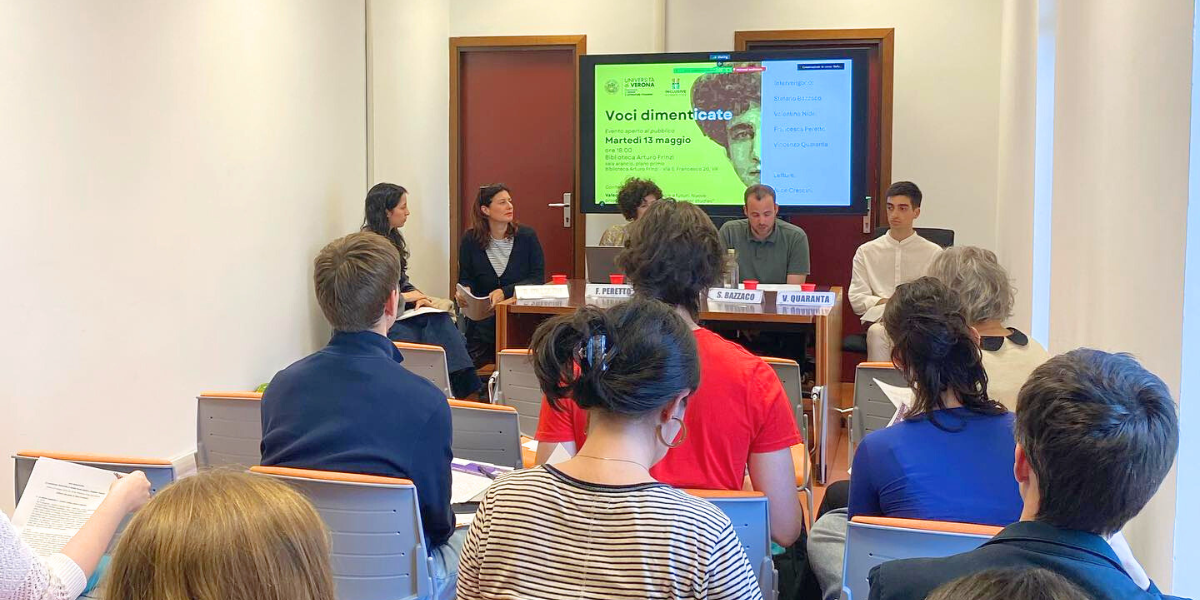
Pubblico in Sala Arancio per Voci dimenticate

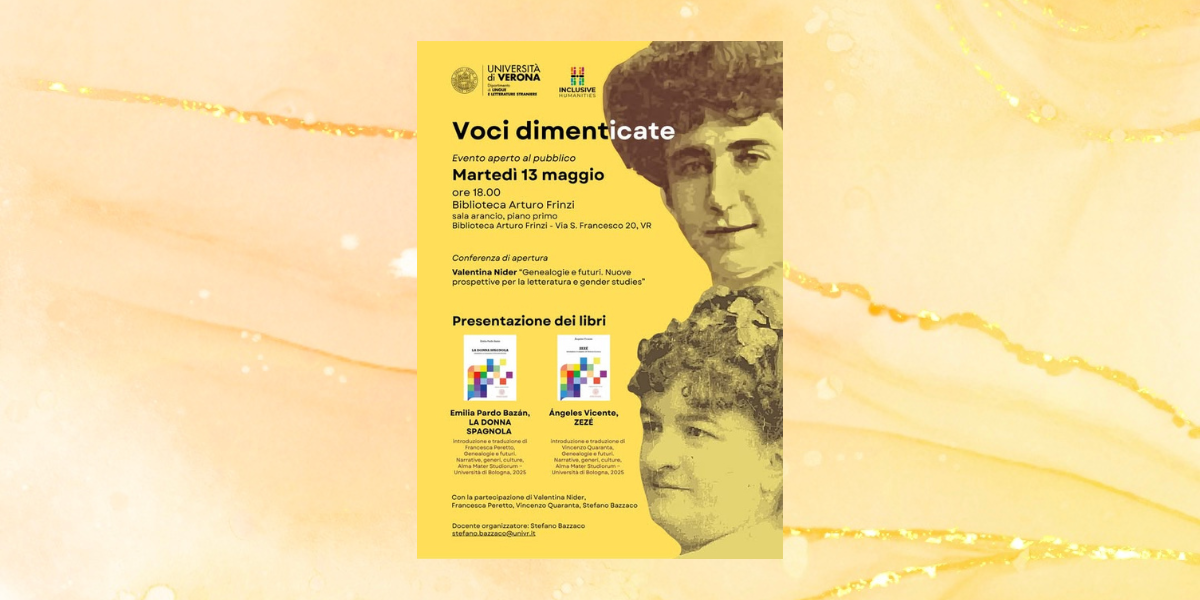
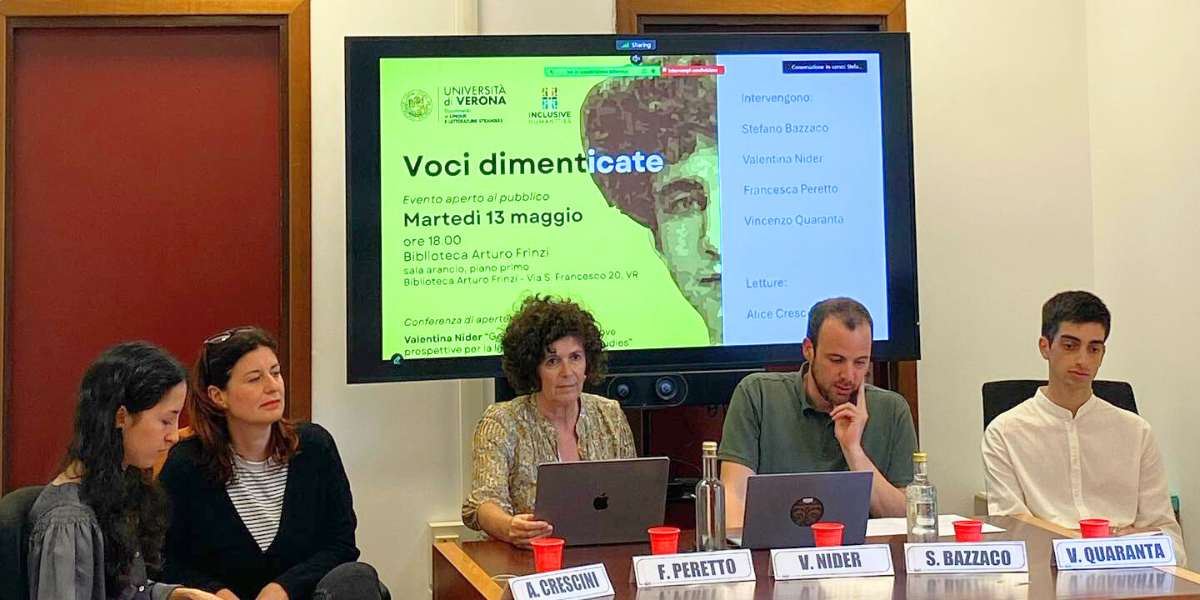
On Tuesday, May 13, the Orange Room of the Arturo Frinzi Library hosted the second conference in the Forgotten Voices series. The event featured Professor Valentina Nider (University of Bologna), who delivered a talk entitled Genealogies and Futures: New Perspectives for Literature and Gender Studies.”

The meeting explored the vibrant ferment of female voices that, between the nineteenth and twentieth centuries in Spain, courageously challenged traditional institutions in order to claim emancipation and independence. Particular attention was devoted to the luminous figure of Emilia Pardo Bazán, an intellectual and journalist who became a true beacon for her contemporaries, including Carmen de Burgos “Colombine,” Ángeles Vicente, and María Lejárraga.

The conference also provided a valuable opportunity to delve into two fundamental texts recently translated within the series  “Genealogie e futuri“, an open-access resource of the University of Bologna curated by Valentina Nider:

  • La donna spagnola by Emilia Pardo Bazán, with introduction and translation by Francesca Peretto (2025).

  • Zezé by Ángeles Vicente, with introduction and translation by Vincenzo Quaranta (2025).

The event took place with the participation of Francesca Peretto, Vincenzo Quaranta, and Stefano Bazzaco, who helped enrich the discussion. The audience had the opportunity to comment on and analyze the most interesting aspects of the lives and literary production of these extraordinary authors, weaving together the deep reflections of the essays with the evocative power of narrative.

Disability Theatre from 1900 to the Present in German and Italian Disability Studies

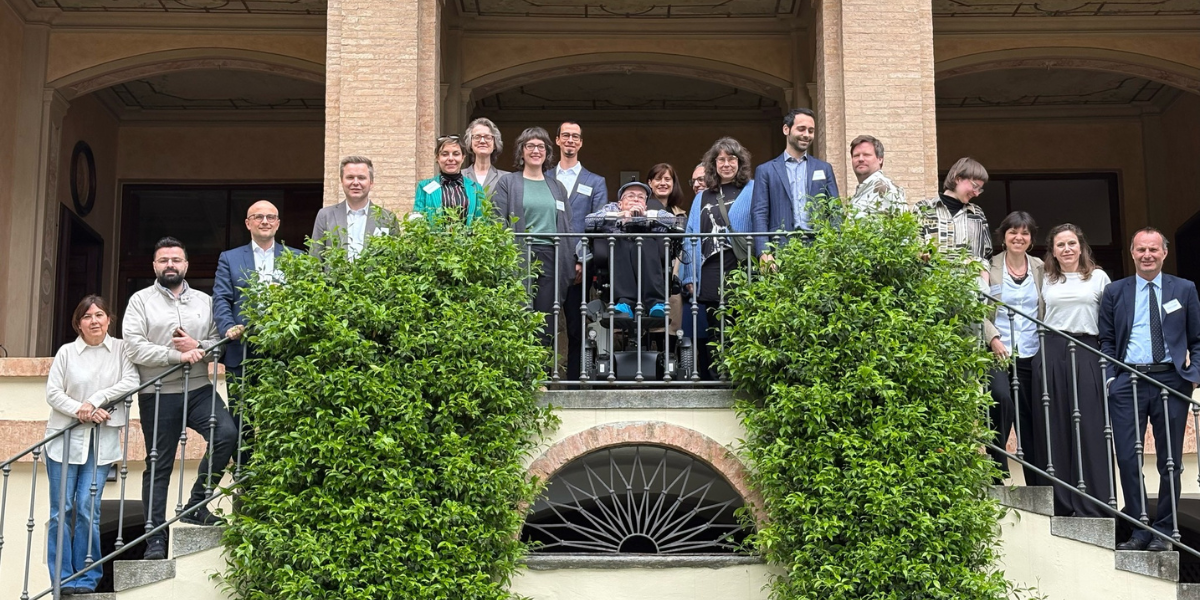
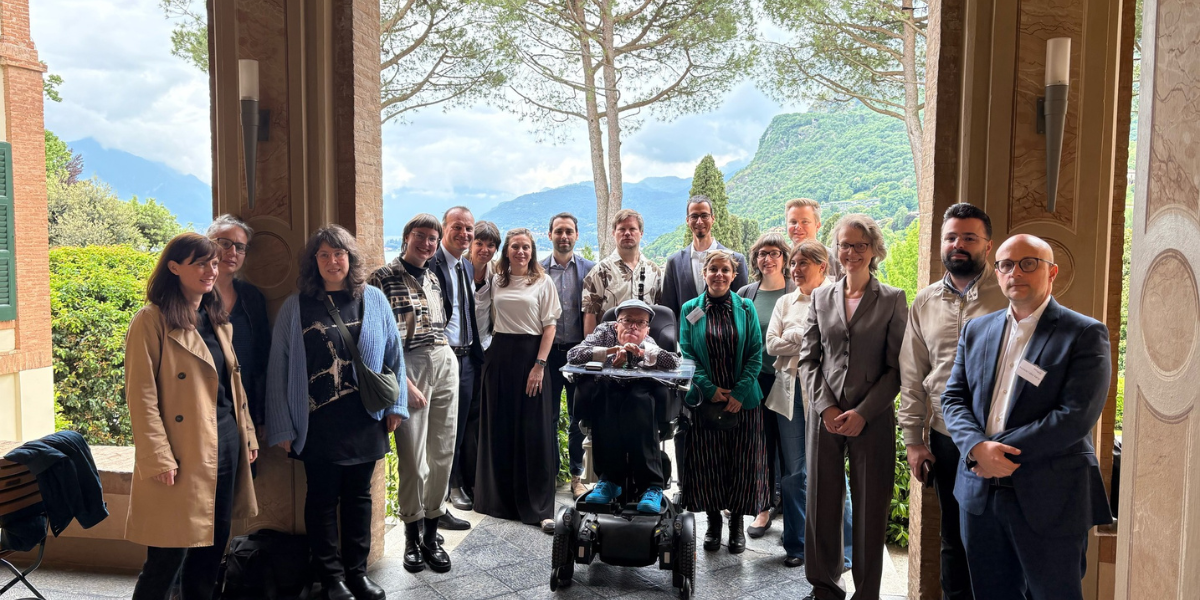
The conference Disability Theatre from 1900 to the Present in German and Italian Disability Studies,” co-organized by our Professor Massimo Salgaro, concluded on Friday, May 9 at Villa Vigoni’s Italo-German Centre for European Dialogue.

From May 6 to 9, 2025, experts in disability studies from Germany, Italy, and other parts of Europe came together to examine a crucial theme: the representation of the disabled body on stage and in dramatic texts from 1900 to the present. It was a moment of in-depth discussion and reflection on how, in the history of European literature, theatrical works have rarely been conceived for actors with disabilities, and on how theatrical theories and institutions have often, albeit unintentionally, reinforced ableism.

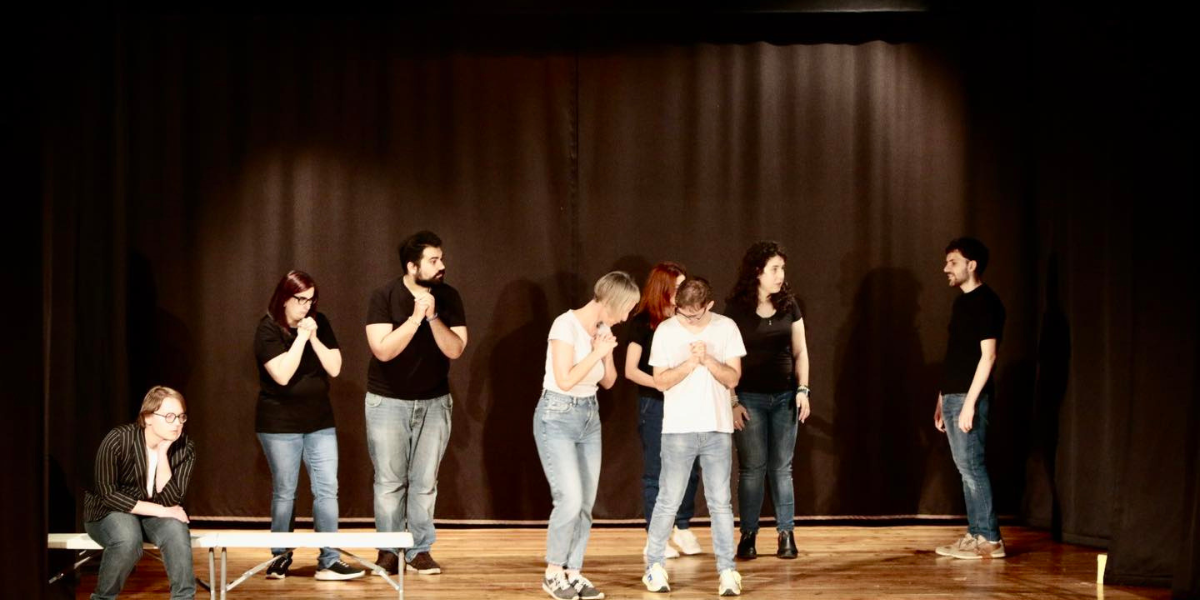
Also within the framework of the initiatives promoted by the conference, on Wednesday, May 7, Teatro a Rotelle performed at the Teatro Cristallo Breccia in Como with a reprise of In principio era la Rupe (In the Beginning There Was the Cliff).

The performance, the result of the creativity and commitment of the university theatre company’s actors and actresses and directed by Nicoletta Vicentini and Jana Karšaiová, makes an ironic and provocative reference to the Spartan practice of abandoning newborns deemed weak on Mount Taygetus. In principio era la Rupe, staged with great intensity by performers with and without disabilities, offered a powerful and moving reflection on how perceptions of disability have changed over time.

Forgotten Voices: Emilia Pardo Bazán and Ángeles Vicente

As part of the Forgotten Voices initiative, on Tuesday, May 13 at 6:00 p.m., the Orange Room of the Arturo Frinzi Library will host a fascinating opening lecture by Valentina Nider (University of Bologna) entitled “Genealogies and Futures: New Perspectives for Literature and Gender Studies.” In Spain at the turn of the nineteenth and twentieth centuries, a ferment of female voices challenged traditional institutions, claiming emancipation and independence. Among them shines the figure of Emilia Pardo Bazán – intellectual, journalist, and a beacon for her contemporaries such as Carmen de Burgos “Colombine,” Ángeles Vicente, and María Lejárraga.

The event will also be an opportunity to explore two texts recently translated within the series Genealogie e futuri,” an open-access collection of the University of Bologna curated by Valentina Nider:

  • La donna spagnola by Emilia Pardo Bazán, with introduction and translation by Francesca Peretto (2025).

  • Zezé by Ángeles Vicente, with introduction and translation by Vincenzo Quaranta (2025).

Francesca Peretto, Vincenzo Quaranta, and Stefano Bazzaco will also take part in the event. We look forward to discussing together the most interesting aspects of the lives and literary production of these extraordinary authors, weaving the reflections of critical essays with the evocative power of narrative.

The 14th episode of Inclusioni online

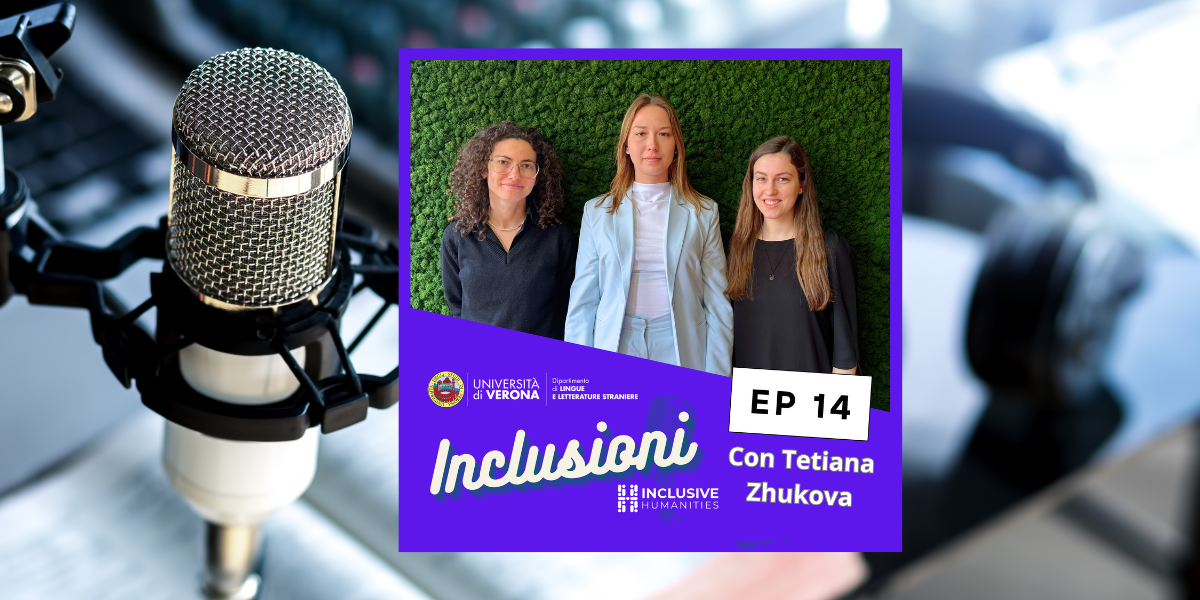
The fourteenth episode of Inclusioni, the podcast channel of the Department of Foreign Languages and Literatures at the University of Verona, produced in collaboration with Fuori Aula Network, is now available on the main platforms. In this episode, entitled Modern Heroines of Ukraine: Women Resisting, Rescuing, and Fighting for Freedom,” we will hear how Ukrainian women have played – and continue to play – a key role in the cultural resistance of their people.

We interviewed Tetiana Zhukova, an expert in human rights and international law, who works in collaboration with the UN, the EU, the Council of Europe, and the OSCE to prosecute war crimes and human rights violations in the temporarily occupied territories of Ukraine, recounting stories of women who have been imprisoned, tortured, and killed.
The interview, conducted in English, was curated by doctoral students Diana Bota and Khrystyna Yordan, who—together with Professors Anna Giust and Daniele Artoni – coordinate the series of events “ЇЇ Her: Dimensions of Ukrainian Womanhood,” in which Zhukova was a guest for the second session.

Happy listening!