Author: martina

Forgotten Voices: Emilia Pardo Bazán and Ángeles Vicente

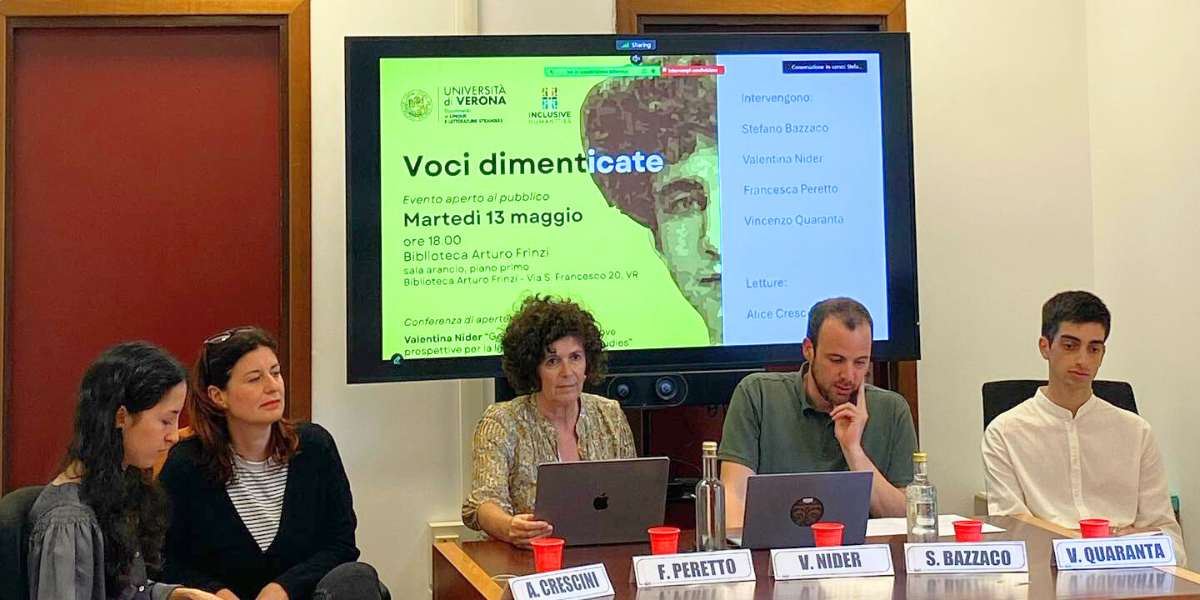
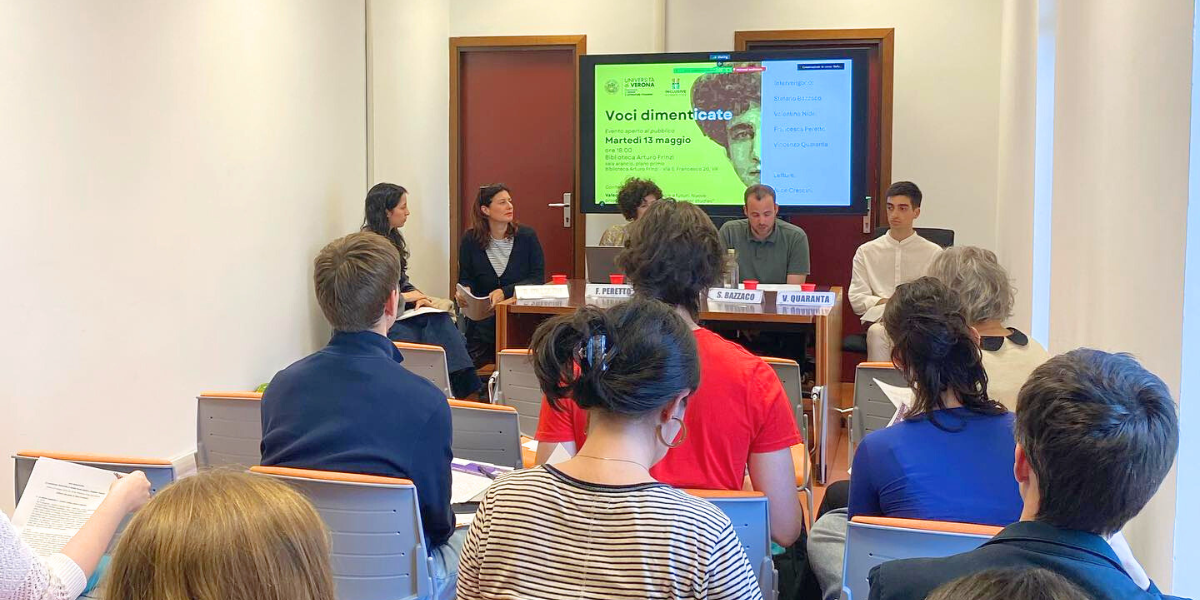
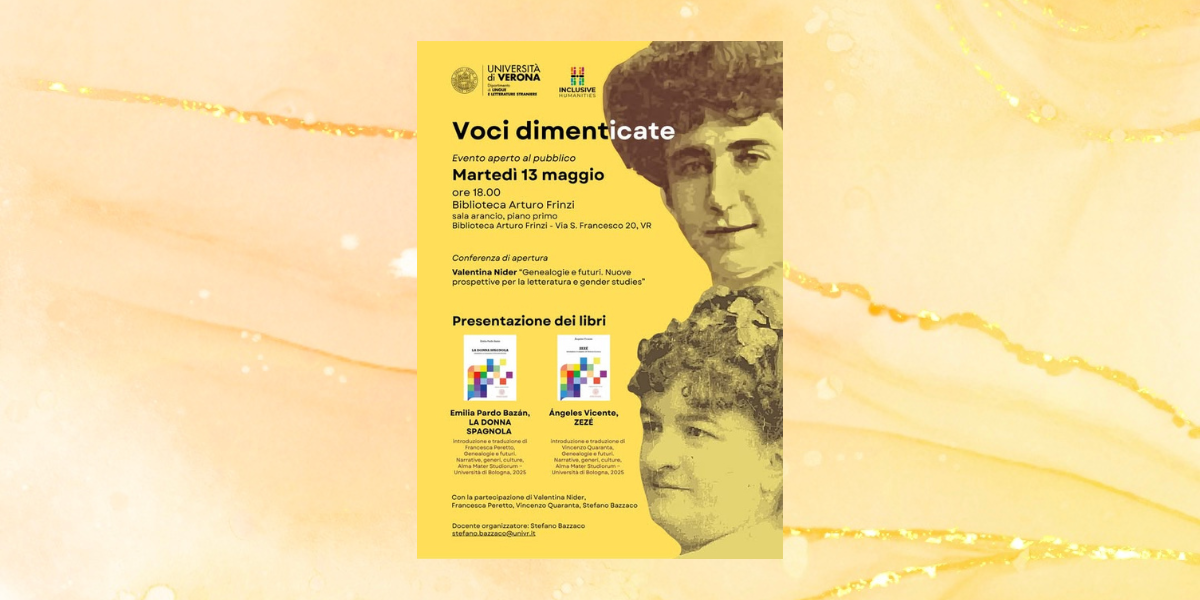
As part of the Forgotten Voices initiative, on Tuesday, May 13 at 6:00 p.m., the Orange Room of the Arturo Frinzi Library will host a fascinating opening lecture by Valentina Nider (University of Bologna) entitled “Genealogies and Futures: New Perspectives for Literature and Gender Studies.” In Spain at the turn of the nineteenth and twentieth centuries, a ferment of female voices challenged traditional institutions, claiming emancipation and independence. Among them shines the figure of Emilia Pardo Bazán – intellectual, journalist, and a beacon for her contemporaries such as Carmen de Burgos “Colombine,” Ángeles Vicente, and María Lejárraga.

The event will also be an opportunity to explore two texts recently translated within the series Genealogie e futuri,” an open-access collection of the University of Bologna curated by Valentina Nider:

  • La donna spagnola by Emilia Pardo Bazán, with introduction and translation by Francesca Peretto (2025).

  • Zezé by Ángeles Vicente, with introduction and translation by Vincenzo Quaranta (2025).

Francesca Peretto, Vincenzo Quaranta, and Stefano Bazzaco will also take part in the event. We look forward to discussing together the most interesting aspects of the lives and literary production of these extraordinary authors, weaving the reflections of critical essays with the evocative power of narrative.

The 14th episode of Inclusioni online

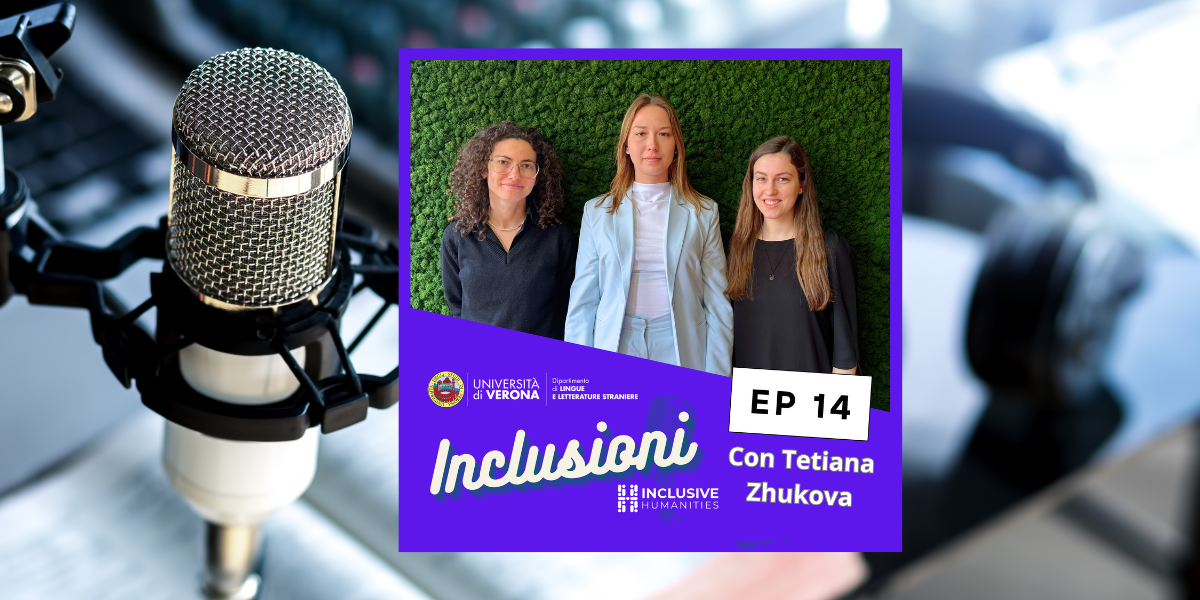
The fourteenth episode of Inclusioni, the podcast channel of the Department of Foreign Languages and Literatures at the University of Verona, produced in collaboration with Fuori Aula Network, is now available on the main platforms. In this episode, entitled Modern Heroines of Ukraine: Women Resisting, Rescuing, and Fighting for Freedom,” we will hear how Ukrainian women have played – and continue to play – a key role in the cultural resistance of their people.

We interviewed Tetiana Zhukova, an expert in human rights and international law, who works in collaboration with the UN, the EU, the Council of Europe, and the OSCE to prosecute war crimes and human rights violations in the temporarily occupied territories of Ukraine, recounting stories of women who have been imprisoned, tortured, and killed.
The interview, conducted in English, was curated by doctoral students Diana Bota and Khrystyna Yordan, who—together with Professors Anna Giust and Daniele Artoni – coordinate the series of events “ЇЇ Her: Dimensions of Ukrainian Womanhood,” in which Zhukova was a guest for the second session.

Happy listening!

In principio era la Rupe performed in Mantova

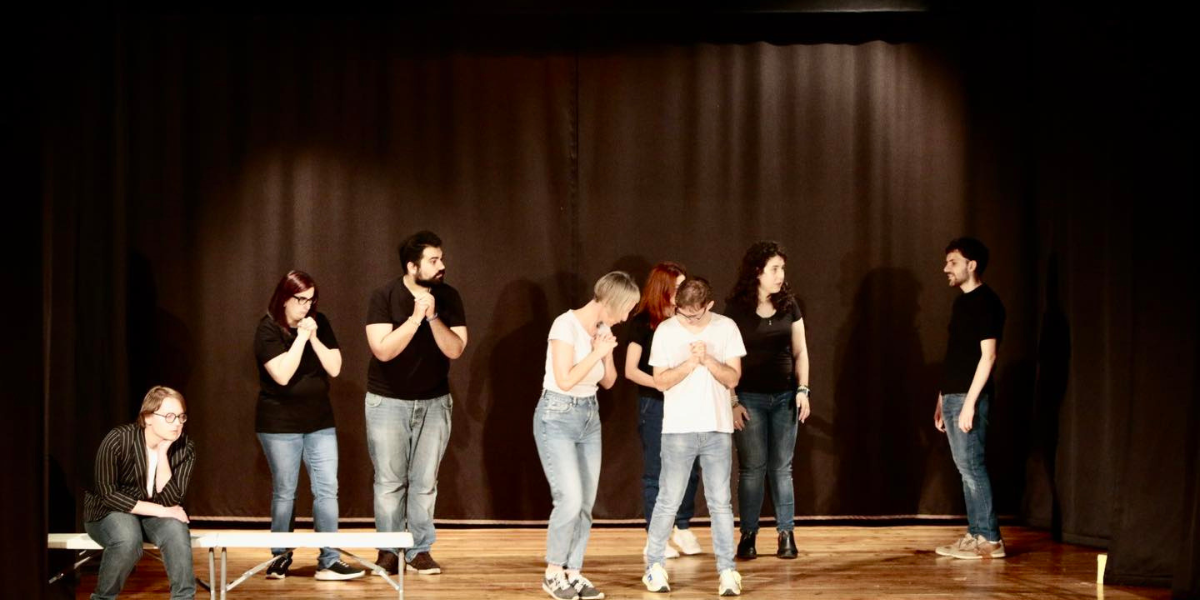
On Saturday, April 12, the former Church of Madonna delle Vittorie in Mantua hosted a moving reprise of In principio era la rupe (In the Beginning There Was the Cliff) by the University of Verona’s Teatro a Rotelle company, at the invitation of the Association of Parents for Autism. Directed by Nicoletta Vicentini and Jana Karšaiová, the performance struck deep emotional chords. “In principio era la rupe,” with its ironic title evoking the cruel Spartan practice, offered a powerful reflection on the evolution of perceptions of disability throughout history.

Sustainable digital publication and accessible digital editing infrastructures

The series of meetings Sustainable Digital Publication and Accessible Digital Editing Infrastructures will take place from Monday, May 19 to Thursday, May 29 with Professor Susanna Allés-Torrent from the University of Miami. This workshop focuses on Digital Scholarly Editions (DSE), with particular attention to inclusion and “minimal computing.”

DH AND TEXTUAL SCHOLARSHIP. THE CASE OF DIGITAL SCHOLARLY EDITION

Dates: May 19–20, 2025
Time: 10:00 a.m. – 12:00 p.m.
Location: Co-working Room

These sessions will explore the fundamental methodologies and data for textual analysis and interpretation within Digital Humanities. We will also discuss the technologies used in creating a digital edition, from markup to final publication.

HOW TO PUBLISH A DIGITAL SCHOLARLY EDITION? A SURVEY ON THE EXISTING FRAMEWORKS

Dates: May 22–23, 2025
Time: 10:00 a.m. – 12:00 p.m.
Location: Room 1.6

This session will provide an overview of the frameworks currently available for publishing encoded texts. Practical examples will be presented on transforming XML files into HTML using CSS, jQuery, and JavaScript (such as TEIViewer and TEI Boilerplate). More advanced online publishing platforms and frameworks will also be examined, including CETEIcean, Version Machine, Edition Visualization Technology, and TEI Publisher.

DH, INCLUSION AND MINIMAL COMPUTING. WORKSHOP ON STATIC SITE DSE

Dates: May 28–29, 2025
Time: 10:00 a.m. – 12:00 p.m.
Location: Room 1.6

This workshop will allow participants to work directly with the Jekyll static site generator and the Ed. template. It will also explore the potential of so-called “minimal computing” in terms of accessibility and sustainability, reflecting on how these practices can make digital editions more inclusive.

The six lectures, which will be held in English, are open to all students and interested PhD candidates. Students from all degree programs of the Department of Languages may receive 2 Type D ECTS credits with attendance of at least 75% of the sessions.

Registration opens on April 28, 2025.

The 13th episode of Inclusioni is online

The thirteenth episode of Inclusioni, the podcast channel of the Department of Foreign Languages and Literatures – University of Verona – in collaboration with Fuori Aula Network, is now available on the main platforms. Entitled Inclusion and Linguistic Mediation,” the episode explores how linguistic and cultural mediation can be used to ensure inclusion among people who do not speak the same language—but what exactly does this involve? What forms of linguistic mediation exist, and what are their main characteristics?

In their interview, Sara Corrizzato and Claudio Bendazzoli, both scholars of English, translation, and linguistics in our department, outline some possible modes of translation and present the various tools commonly used. They also address the role of technology applied to fields in which linguistic mediation services are provided—an area that is constantly evolving in step with changes in society, the market, and technological development.

Happy listening!