Author: martina

The fifth episode of Inclusioni is online

The fifth episode of Inclusioni, the podcast channel of the Department of Foreign Languages and Literatures in collaboration with Fuori Aula Network, is now available online on major platforms. This all-female episode focuses on Carmen de Burgos, a writer and journalist who tirelessly fought for women’s rights in early 20th-century Spain, to the point of being placed on the list of prohibited authors by the Franco regime.

The hosts are Prof. Antonella Gallo, a professor of Spanish Literature at the University of Verona who has been studying Carmen de Burgos for several years, and Prof. Anna Altarriba Cabré, a Linguistic Expert Collaborator at our university and president of the Italo-Spanish Cultural Association of Verona. The conversation and excerpts we will hear focus on the novel “La rampa” or “The Inclined Plane” (Le Lettere Publishing House, Florence), which was released in bookstores on March 1, 2024, and translated into Italian by Prof. Gallo.

“The Inclined Plane” captures the condition of women in early 20th-century Spain and Carmen de Burgos’ long political activism for women’s emancipation. It is also a powerful work of protest against gender inequality and a valuable testament to the author’s tenacious fight for a spiritual renaissance in Spain.

Happy listening!

Representations of Otherness, Diversity, and Marginality in Contemporary European and Non-European Literatures

Phenomena of social inequality and cultural exclusion, as well as forms of restrictions to the citizenship status and the consequent populist drifts deprived of any real political and cultural orientation, are effects of the complex power dynamics that, in this age of ours marked by an ever-increasing mobility, are exercised by global capitalism on the one hand, and, on the other, by current sovereigntist and nationalist movements. This research project addresses these pressing issues, which constitute crucially decisive challenges for our societies today, by analyzing representations of otherness, diversity, and marginality in contemporary European and non-European literatures. The goal of this investigation is to explore the different cultural trends characterizing our societies, with the aim of:

  • delving into their plural constitution,
  • highlighting the current dynamics of cultural, social, linguistic, and ethnic processes of  exclusion and inclusion, in connection with the ways in which they are perceived in an increasingly globalised world, and finally
  • outlining new modes of representation, new imaginaries and new spaces for action for those subjectivities that dwell in the cultural and political margins of our times. 

The project embraces an interdisciplinary perspective based on a convergence between postcolonial studies, categories and concepts developed by biopolitics, most recent researches on transnationalism, transculturalism and globalisation, as well as on the acquisitions developed by migration studies. The originality of the results will be guaranteed by:

  1. a focus on new literary trends, which nonetheless will make use, where necessary, of a diachronic approach aimed at highlighting the historical evolution of phenomena;
  2. the aim of carrying out a cohesive and transnational discourse on the European and non-European literature centered on the themes of otherness/marginality/diversity;
  3. the objective of broadening the methodological and theoretical framework espoused by the research project, by comparing the approaches adopted in the various linguistic and cultural contexts tackled by the researchers participating in it.

Group leader: Gabriella Pelloni

Internal members:

  • Daniele Artoni
  • Manuel Boschiero 
  • Martina Brufani 
  • Elisa Destro 
  • Davide Di Maio 
  • Lídia Carol Geronès 
  • Annalisa Pes 
  • Lara Righi 
  • Luca Salvi 
  • Isolde Schiffermüller 
  • Sara Trentini 
  • Andrea Zinato 
  • Susanna Zinato 

External members: 

  • Alessandro Achilli (Cagliari) 
  • Edoardo Balletta (Bologna) 
  • Paola Bellomi (Siena) 
  • Ugo Fracassa (Roma 3) 
  • Marika Piva (Padova) 
  • Marco Puleri (Bologna) 

Actions:  WP 1.1; WP 1.2 

References: 

Appadurai, Arjun (1996): Modernity at Large: Cultural Dimensions of Globalization. Minneapolis: University of Minnesota Press.  

Epstein, Mikhail (2009), Transculture: A Broad Way Between Globalism and Multiculturalism, American Journal of Economics and Sociology 68(1), p. 327-351. 

Esposito, Roberto (2006): Communitas. Origine e destino della comunità. Torino: Einaudi (nuova edizione ampliata). 

The Notion of “Subject” as the Cornerstone for the Creation of a Metagrammatical Terminological Map

The project aims to investigate the notion of “subject” and its various definitions in light of morphological, syntactic, and semantic properties.

The project involves studying the concept of “subject” in linguistic corpora and in traditional manuals/grammars, with the goal of building a network of connections within the field of metalinguistic terminology and facilitating the creation of a reference conceptual map.

Group leader: Alessandra Tomaselli

Internal members:

  • Sabrina Bertollo
  • Tamara Bassighini
  • Sibilla Cantarini
  • Andrea Padovan
  • Stefan Rabanus

Interim results:

On November 26, the research grant holder, Dr. Tamara Bassighini, presented the work carried out and the initial results obtained in the first year of research with a presentation in German entitled “Erstellung einer metagrammatischen Terminologiekarte ausgehend vom Begriff des Subjekts” (The Notion of “Subject” as the Cornerstone for the Creation of a Metagrammatical Terminological Map). The presentation brings together preliminary results and lays the foundations for planning the research group’s work in the coming months.

Below is a translation of the slides that best summarize the presentation:

Audiovisual Accessibility and Inclusion in the University Setting

The main objective of the project is to identify strategies that can facilitate access to audiovisual content for deaf and blind people. To this end, a series of questionnaires are planned to clarify the needs, especially in the audiovisual field, that groups of people with hearing and visual disabilities may have in various social contexts: universities, cinemas, theaters, musicals, operas, etc.

Group leader: Rosa María Rodríguez Abella

External members:

  • Luisa Chierichetti (University of Bergamo)
  • Juan Pedro Rica Peromingo (Complutense University of Madrid)
  • Maria Cristina Secci (University of Cagliari)


Accessibility, Inclusion, and Metalinguistic Reflection in the Hispanic Context

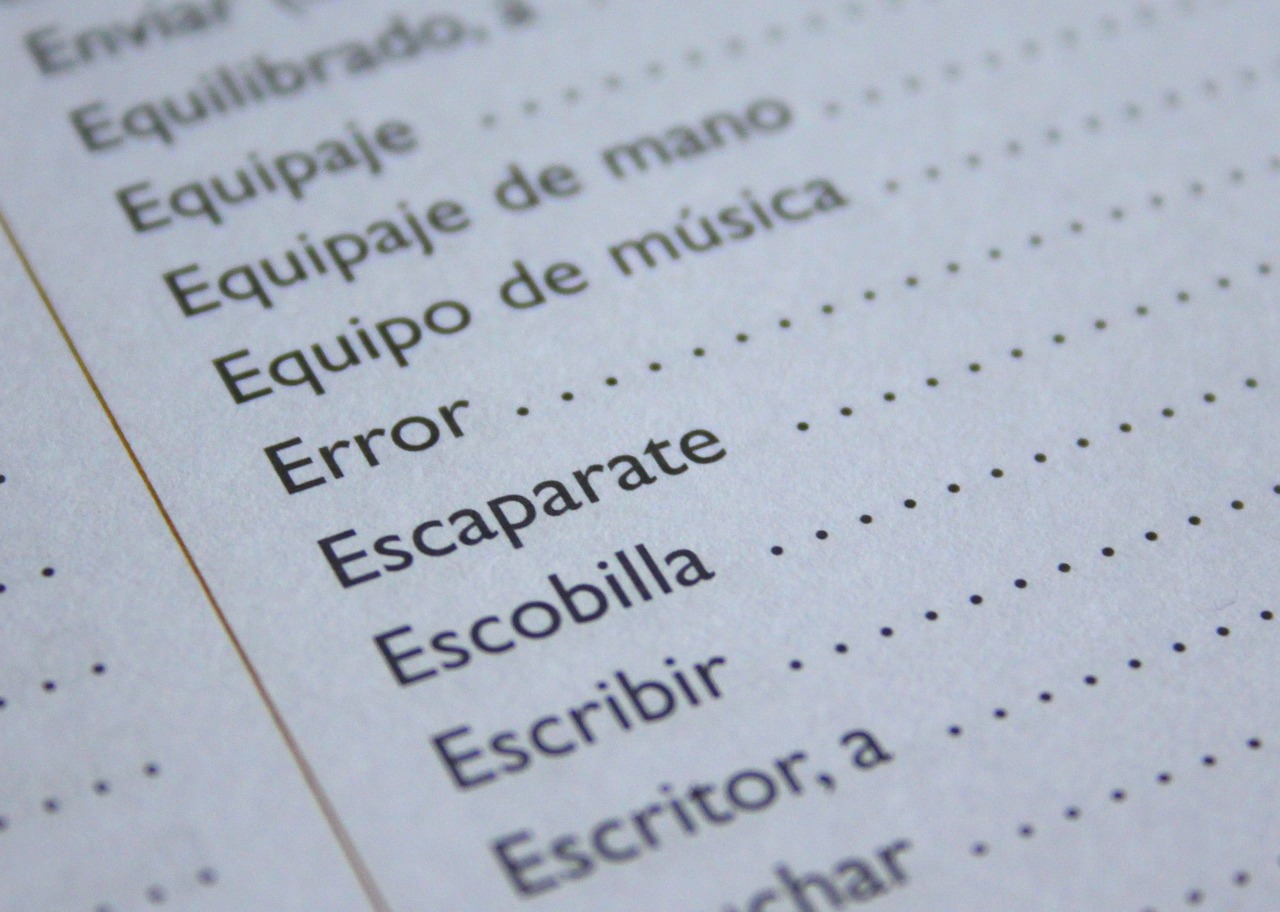
The project aims, first of all, to create a corpus of metalinguistic works published between the 19th and 20th centuries, focusing on bilingual dictionaries, manuals, and educational guides for teaching Spanish, especially as a foreign or second language. Materials aimed at marginalized or excluded groups, such as Indigenous American communities, Italian migrants, and deaf people, will be selected.
Secondly, the project includes conducting a qualitative study on the collected educational materials to identify the metalinguistic notions and strategies employed, as well as the implicit glottodidactic conceptions in the texts. The analysis of metalinguistic notions will involve an in-depth study of the terminology used, the grammatical approach adopted, and the authors’ conceptions regarding the language and its contexts of use.

Group leader: Francesca Dalle Pezze

Internal members:

  • Franklin Yessid Arias Bedoya (postdoctoral researcher)
  • Matteo De Beni
  • Renzo Miotti
  • Elisa Sartor

External members:

  • Dunia Hourani Martín (University of Málaga)


Extraction of Metalinguistic Notions from Textbooks for Teaching Russian as a Foreign and Heritage Language”

The project aims to create a corpus of Russian as a Foreign Language (RFL) textbooks to enable the identification and extraction of metalinguistic notions. These definitions will be used to develop guidelines for teaching metalinguistic concepts, which will also meet the needs of learners who speak Russian as a heritage language.

Referente: Giorgia Pomarolli

Membri interni:

  •  Daniele Artoni
  • Tania Triberio (postdoctoral researcher)

Membri esterni:

  • Diana Lyadskaya (Università di Trento)
  • Linda Torresin (Università di Padova)