Author: martina

Fifth Food Talk

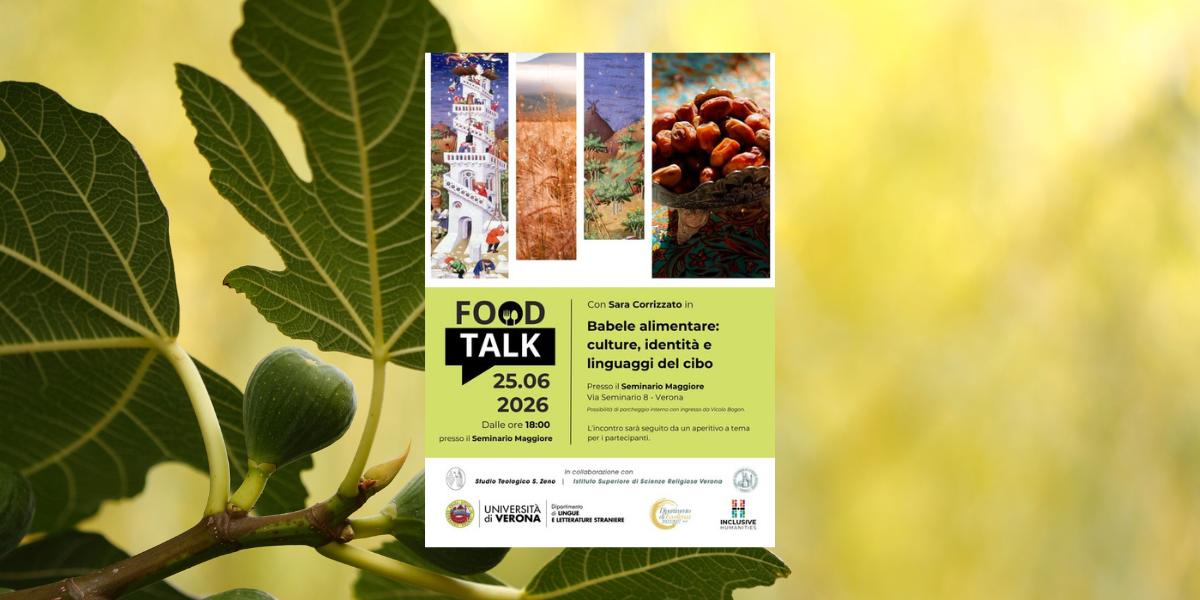
Is food a universal language? Can it tell us who we are and reveal our cultural differences? In the next installment of the Food Talks series, taking place on Thursday, June 25, 2026, from 6:00 PM at the Seminario Maggiore (Via Seminario 8, Verona), we will explore the deep link between food, identity, and language.

Together with Sara Corrizzato from the Department of Foreign Languages and Literatures at the University of Verona, we will embark on a fascinating journey through the “Food Babel,” ending with a thematic social gathering.

Parking is available on-site at Seminario Vescovile Maggiore di VeronaFai clic per aprire il riquadro laterale per ulteriori informazioni, accessible via the entrance on Vicolo Bogon. The event is organized in collaboration with the Studio Teologico S. Zeno and the Istituto Superiore di Scienze Religiose di Verona, as part of the activities of the departmental Excellence Project “Inclusive Humanities”.
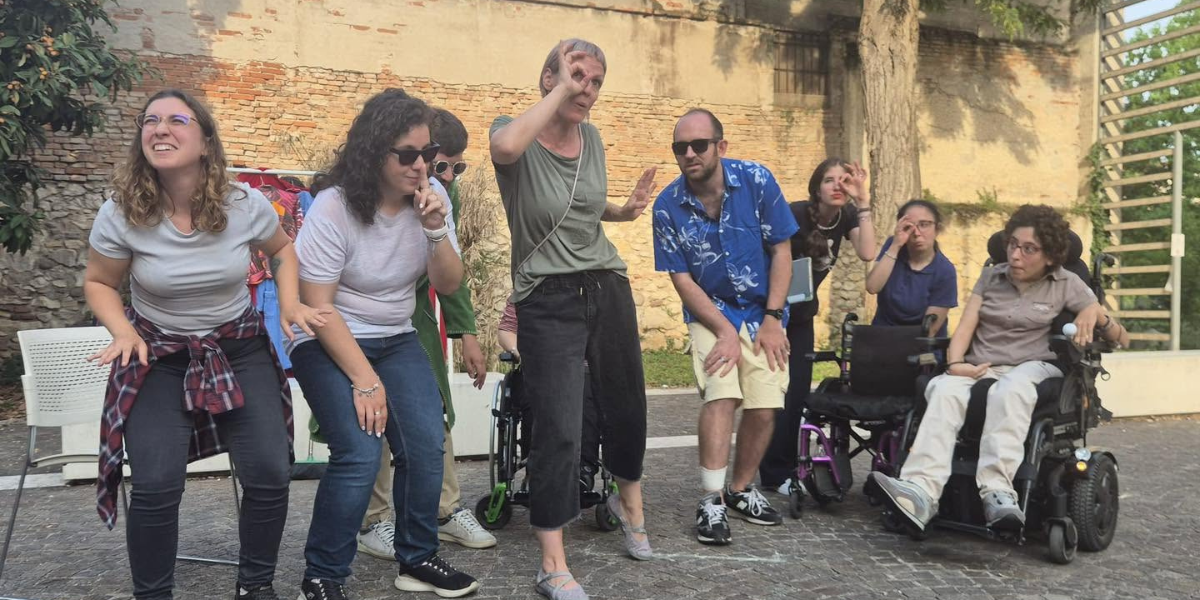
A successful premiere for IL TEATRO DEI BRUTTI

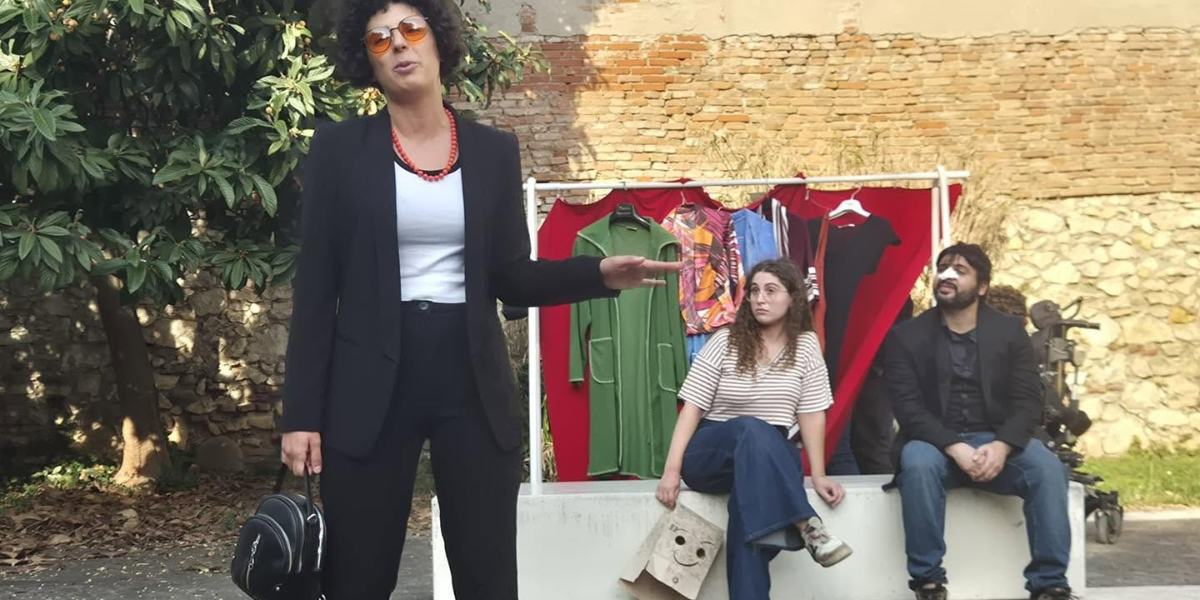
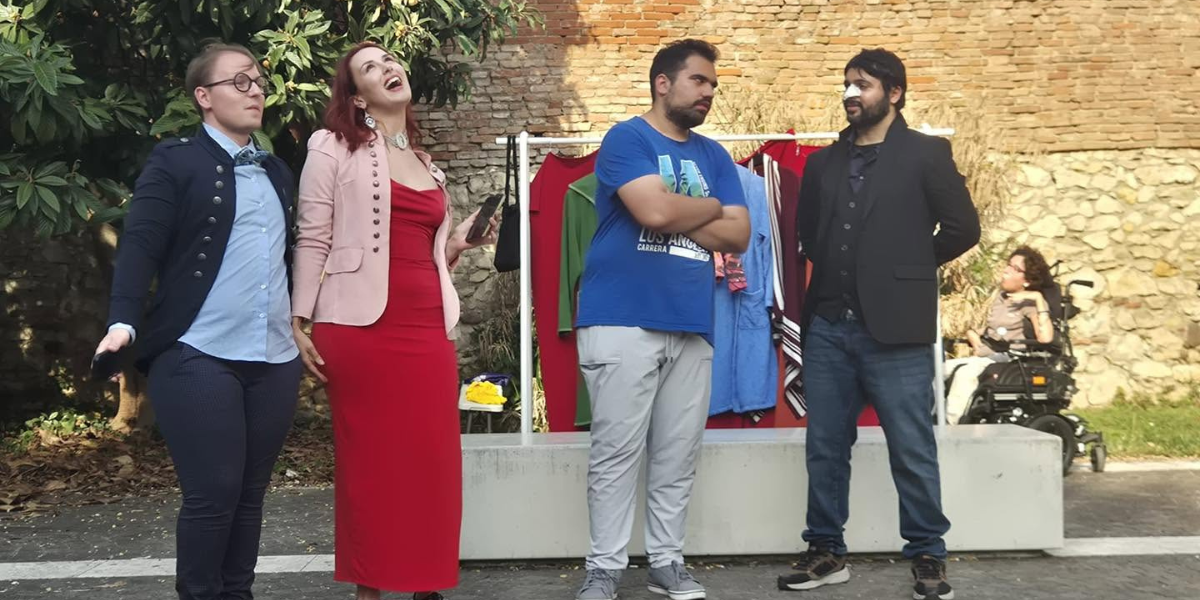
TAR actresses and actors on stage

A resounding success for the premiere of “IL TEATRO DEI BRUTTI”, the new performance by Teatro a Rotelle. This student theater group from the University of Verona was established with the support of Massimo Salgaro from the Department of Foreign Languages and Literatures, and brings to the stage themes of inclusion, accessibility, and diverse abilities.

In the performance staged yesterday evening at Corte Maddalene, a theater troupe is rehearsing Luigi Pirandello’s “La Patente” while the world changes outside the hall. In this dystopian society, power, privilege, and even access to resources are reserved exclusively for those deemed beautiful and aligned with dominant aesthetic standards. Conversely, those considered “aesthetically disadvantaged” are excluded, marginalized, and stripped of their rights.
Marco Lazzarotto’s Il ministero della Bellezza, Luigi Pirandello’s La Patente, and references to Plato’s Symposium serve as the starting point for a concept that mirrors many contemporary mechanisms: the weight of image on social media, aesthetic selection in the workplace, the cult of perfection, and the relentless exposure of the body as a measure of success.

Throughout the performance, this mechanism undergoes a modern update: exclusion is no longer driven by superstition, but by aesthetics. The “ugly” become a discriminated social group, much like Chiàrchiaro was branded with the reputation of a jinx. Beauty ceases to be subjective and transforms into a mechanism of power. The “theater within the theater” structure creates a dual layer: on one hand, Pirandello’s text addressing social masks and imposed identities; on the other, the dystopian reality of the play showing how those very same dynamics persist today in new forms.

TAR actresses and actors on stage

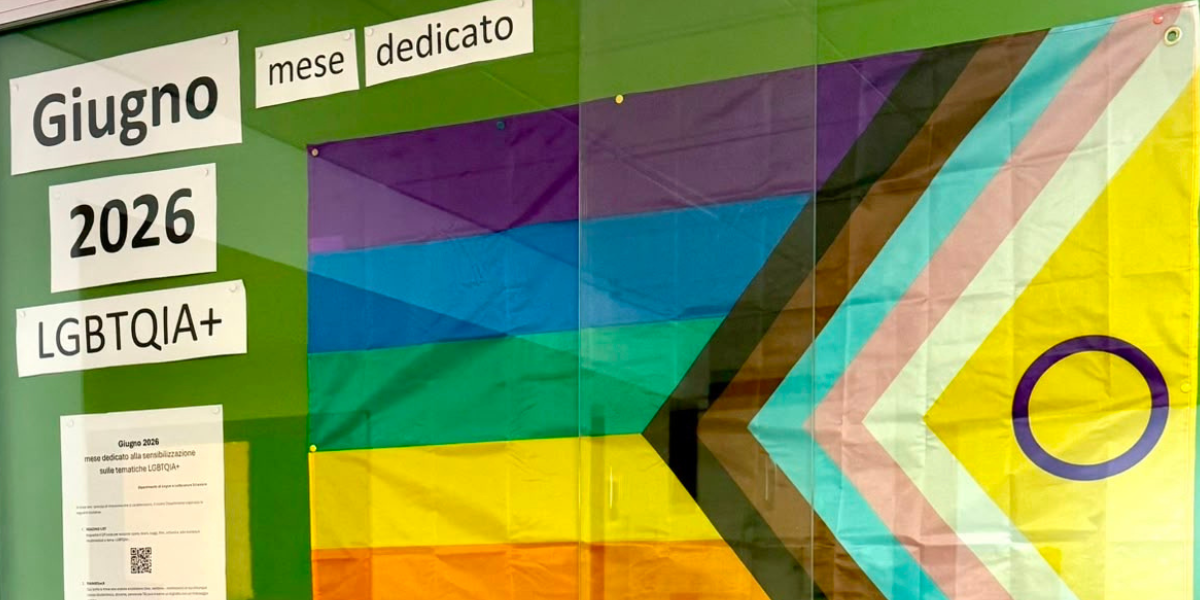
June for LGBTQ+ Rights

On the occasion of university initiatives dedicated to LGBTQ+ Rights Recognition Month and to raising awareness against discrimination based on sexual orientation and gender identity, the Diversity, Equity, and Inclusion (DEI) Committee of the Department of Foreign Languages and Literatures is organizing the following events:

  1. READING LIST In the hallway of Palazzo di Lingue, the dedicated notice board features a QR code granting access to a list of LGBTQIA+ literary, scientific, theatrical, and cinematic works recommended by the faculty according to their respective linguistic and cultural fields.LGBTQIA+ Reading List QR Code
  2. RAINBO(w)X. A collection box is also available in the hallway of Palazzo di Lingue, where members of the university community (students, faculty, and administrative staff) can drop in a note with a message related to the theme. It is a way to give people a voice in an anonymous, safe space, as well as to gather feedback, personal stories, and reports.
  3. NOTICE BOARDS The notice boards on the ground floor will feature symbols from LGBTQIA+ iconography, as well as information about the reading list and upcoming events.

We would also like to highlight several LGBTQIA+-themed events and podcasts taking place in the coming months:

  • Podcast: “Words in Transition: the evolving lexicon of trans identities” featuring Anna Jamka and Miguel Sánchez Ibáñez, curated by Tallarico and Franceschi ORA ONLINE.
  • Podcast “LGBTQIA+ Characters in Fanfiction” featuring Chiara Marchesini, curated by Battisti and Salgaro ORA ONLINE.
  • Conference “The Third Sex: Literary and Musical Hermaphroditism in Seventeenth-Century Venicewith Prof. Jean-François Lattarico, which will take place on Wednesday, July 1, 2026, starting at 5:00 PM in the Co-Working Room, Palazzo di Lingue, first floor mezzanine (Lungadige Porta Vittoria 41, Verona).

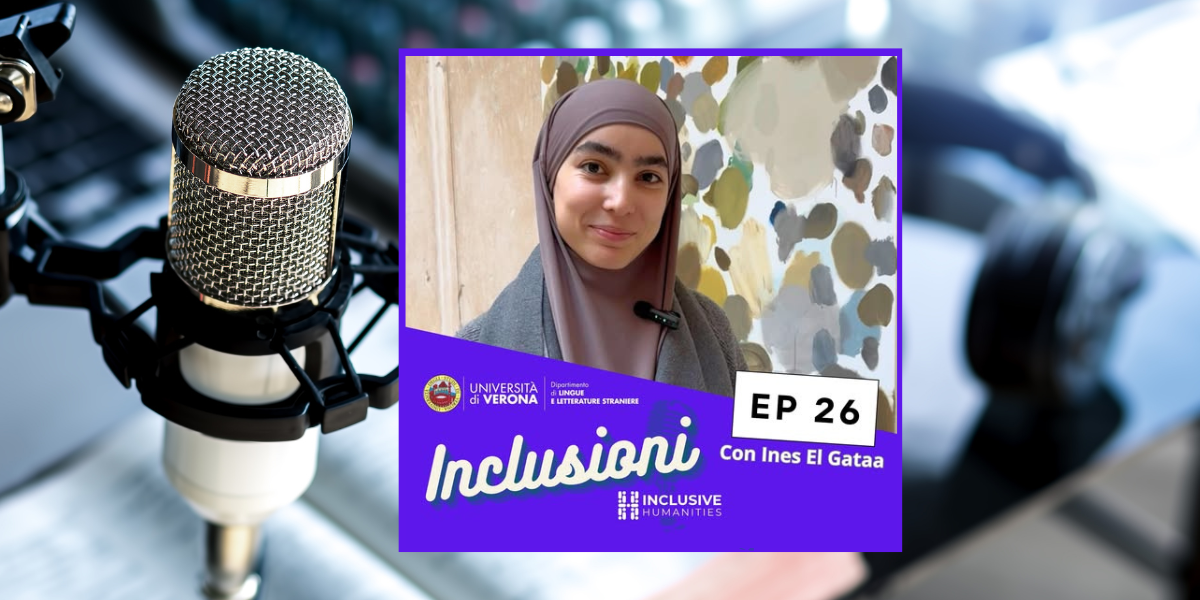
Episode 26 of Inclusioni is now live

Episode 26 of Inclusioni, titled “Behind the Scenes of AI: Data, Ethics, and Human Choices,” is now online. Our guest, Ines El Gataa—a researcher at the University of Trieste and science communicator—is a mathematician specializing in causal inference and data ethics. In simpler terms? She designs models that enable AI to speak to everyone, leaving no one behind.

We often speak of AI as an abstract entity, yet it is made of algorithms, data, and—above all—human choices. We won’t just discuss metrics, but rather how requirements must be integrated into every stage of a model’s lifecycle to make AI not only powerful, but ethically sound and inclusive.

Interviewed by Martina Cerpelloni, IT technician at the University of Verona, Ines will guide us through the crucial challenges of designing truly reliable and non-discriminatory AI systems. Because an artificial intelligence that is not inclusive, after all, is an intelligence that fails in the real world.

The episode is available on Spotify and all major podcast platforms.

Enjoy the episode!

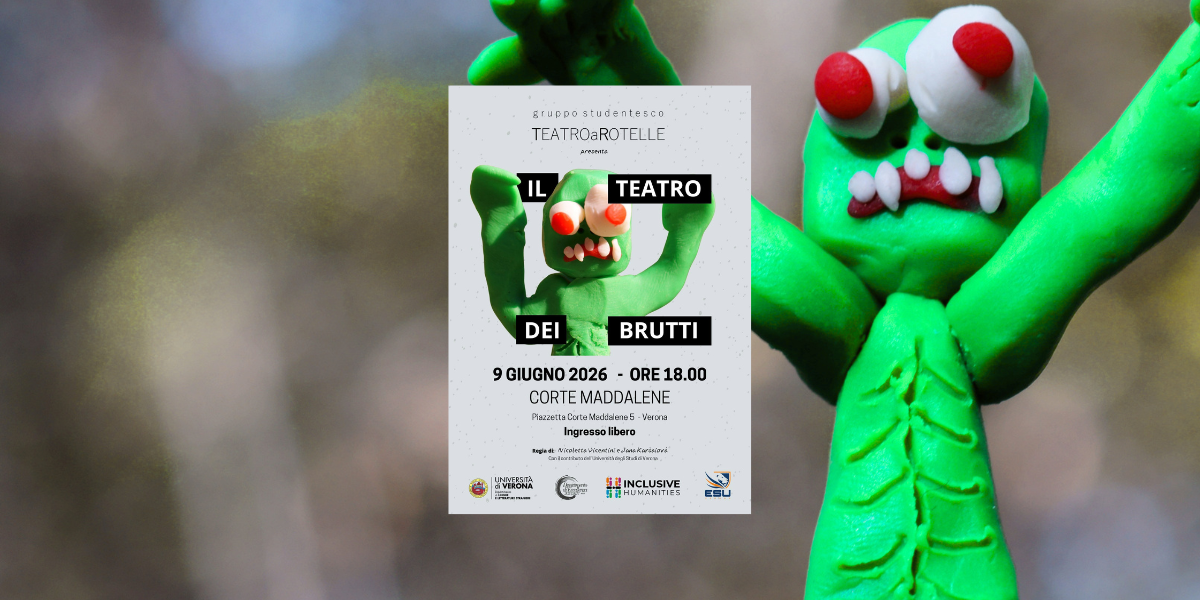
“Il Teatro dei Brutti” on stage at Corte Maddalene

Ready for the new performance by Teatro a Rotelle? The student group of the University of Verona is pleased to invite you to “IL TEATRO DEI BRUTTI”, which will take place on Tuesday, June 9, 2026, starting at 6:00 PM at Piazzetta Corte Maddalene 6 (Verona). Free admission.

Inspired by Marco Lazzarotto’s Il Ministero della Bellezza, Luigi Pirandello’s La Patente, and featuring quotes from Plato’s Symposium, the show builds a play-within-a-play meta-theatre setup: a troupe is busy rehearsing La Patente while the world outside the hall is changing.
In this dystopian society, power, privileges, and even access to resources are granted solely to the beautiful and to those who align with the new dominant aesthetic standards. Those considered “aesthetically disadvantaged” are instead excluded, marginalized, and deprived of their rights.
The concept mirrors many contemporary dynamics: the pressure of image on social media, aesthetic selection in the workplace, and the constant exposure of the body as a measure of success. With its ironic, lighthearted, and engaging style, Teatro a Rotelle brings to the stage a mechanism as absurd as it is recognizable: the speed with which inequality and discrimination can become normalized, and the almost invisible way in which certain rights shrink while other privileges take root.

The event is organized in collaboration with our Department and the University of Verona.

Minimal computing tools for the Humanities

Gimena del Rio Riande and Stefano Bazzaco

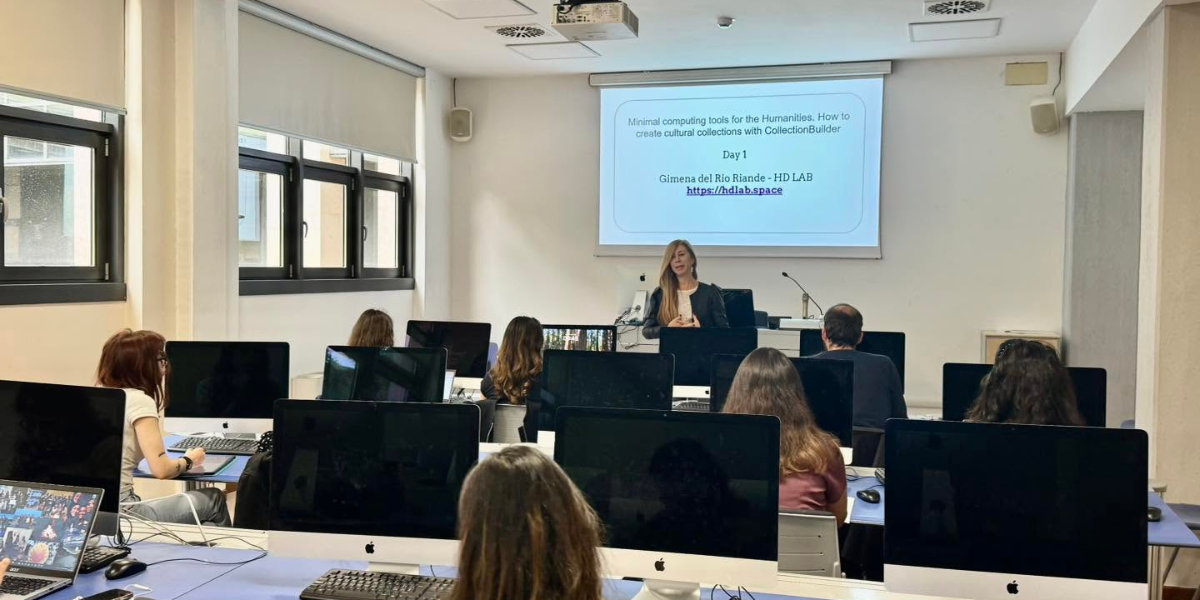
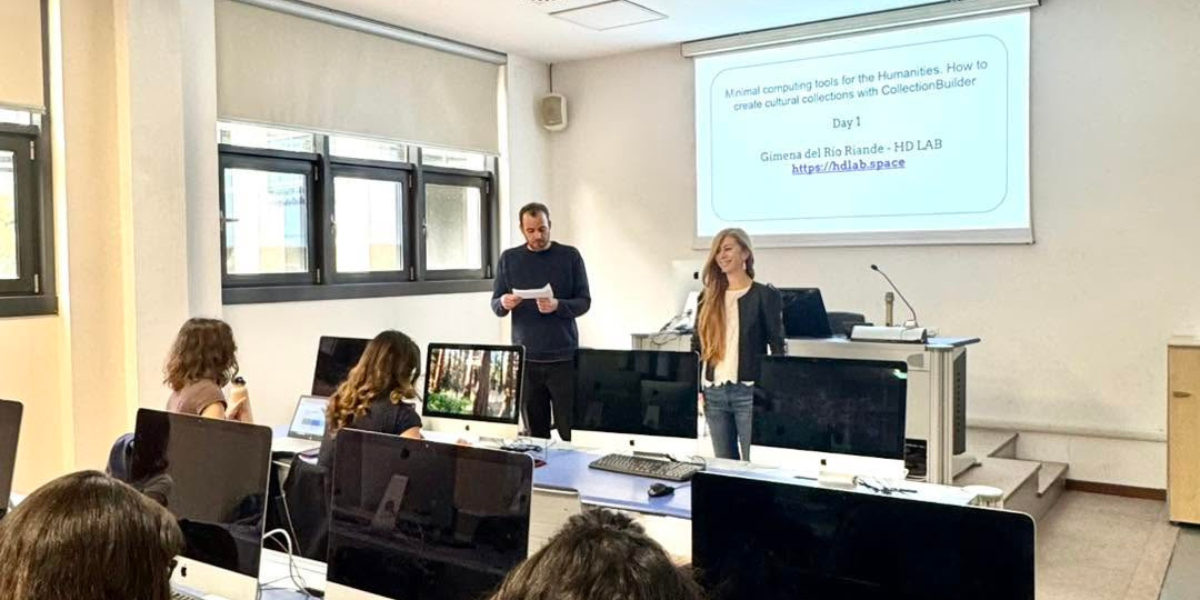
How can digital cultural heritage be made more accessible and sustainable? We discussed this with Gimena del Rio Riande, visiting professor at the Universidad de Buenos Aires / CONICET, who on Friday, May 14 and 22, 2026, hosted a two-part workshop titled “Minimal computing tools for the Humanities: how to create a cultural objects collection with CollectionBuilder.”

During the two sessions held in the computer labs at Polo Zanotto, Gimena introduced us to the universe of minimal computing—a crucial philosophy for promoting equity, accessibility, and inclusive practices in the field of Digital Humanities. Going beyond theory, we put concepts into practice with CollectionBuilder by building a full digital collection of cultural objects, maintaining a strict focus on standard metadata and open science best practices.

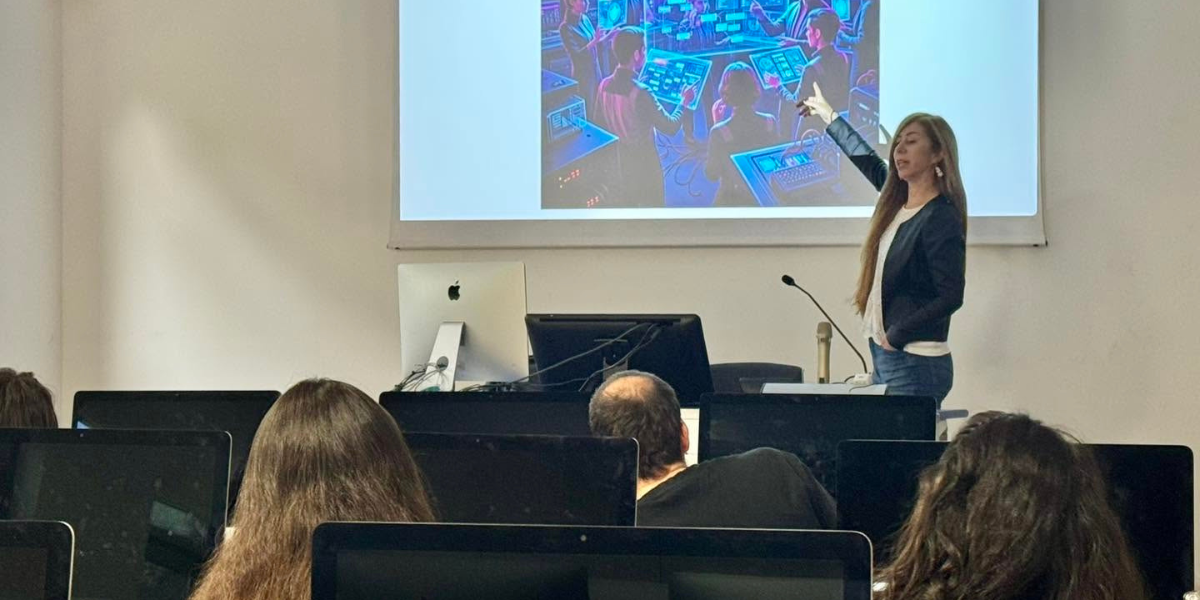
Gimena del Rio Riande introducing one of her slides