Author: martina

Accessible Textual Heritage

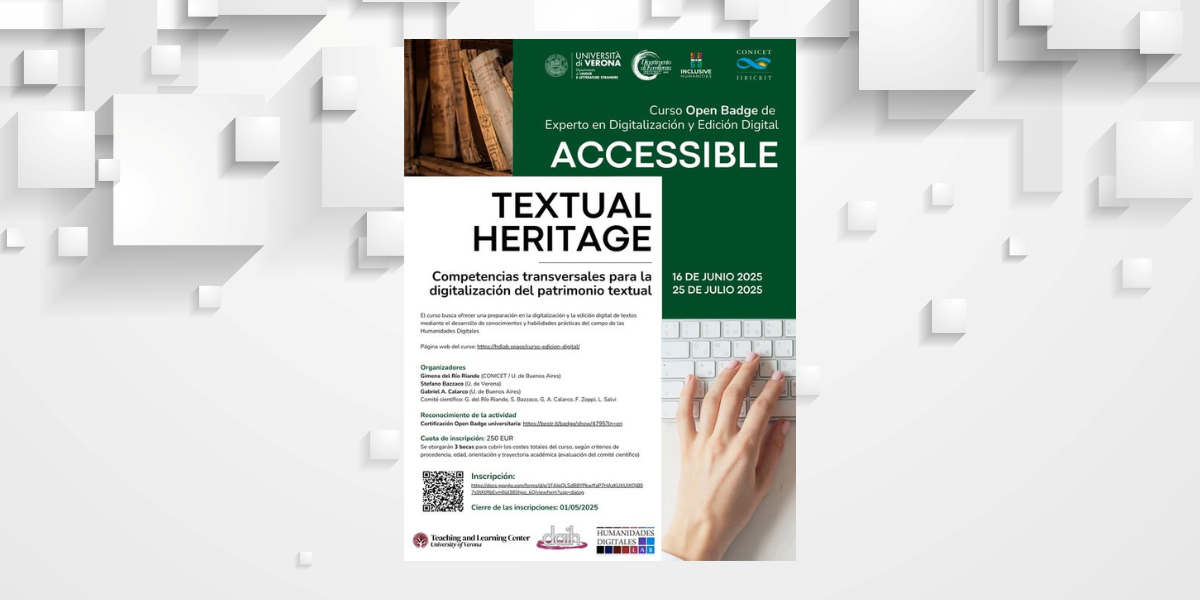
Registration is now open for the Open Badge course Accessible Textual Heritage. Competencias transversales para la digitalización del patrimonio textual,” a new initiative in collaboration with our department, the Teaching and Learning Centre of the University of Verona, and the Laboratorio de Humanidades Digitales IIBICRIT–CONICET in Argentina. The course, which will run from June 15 to July 25, 2025, aims to provide participants with knowledge and skills in the field of Digital Humanities, with a specific focus on automatic document transcription, the production of accessible eBooks, the modeling and creation of digital editions in XML-TEI, and the publication of structured data collections using open-source software.

The course will be held entirely online. Teaching activities will be delivered exclusively in Spanish, with asynchronous online lessons and dedicated teaching materials.
Registration is open until May 1, 2025. More information about the course is available at this link.

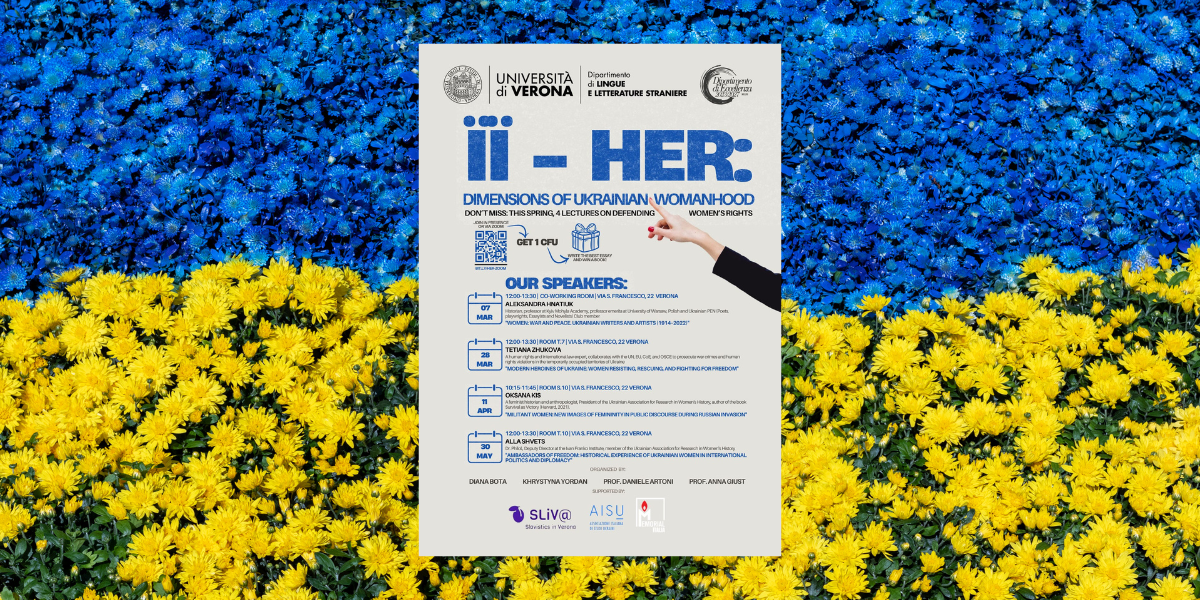
ЇЇ – Her: Dimensions of Ukrainian Womanhood

The lecture series ЇЇ – Her: Dimensions of Ukrainian Womanhood will take place from March 7 to May 30. This series of in-depth talks aims to explore the roles of Ukrainian women in war, peace, and cultural resistance. The truth about Ukraine goes beyond territories: it concerns identity, history, and the future. Ukrainian women are not only witnesses—they are fighters, diplomats, and guardians of culture.

March 7, 12:00–1:30 p.m., Co-working Room
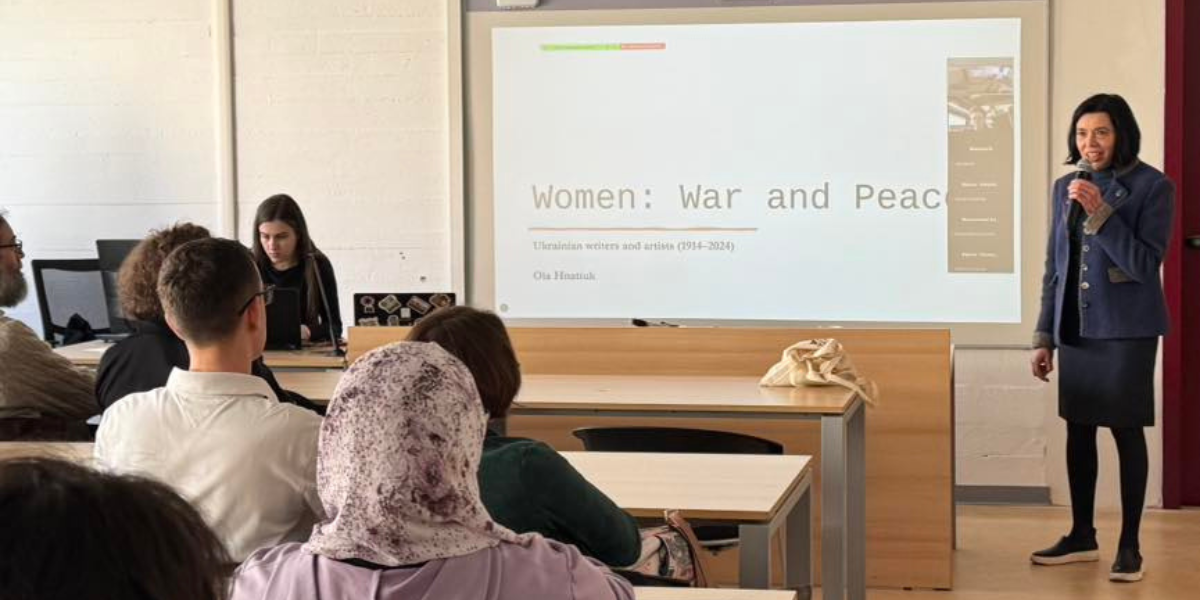
Women: War and Peace. Ukrainian Writers and Artists (1914–2022)
with Aleksandra Hnatiuk (Historian, professor at Kyiv Mohyla Academy, professor emerita at the University of Warsaw, member of the Polish and Ukrainian PEN Clubs)

March 28, 12:00–1:30 p.m., Room T.07
Modern Heroines of Ukraine: Women Resisting, Rescuing, and Fighting for Freedom
with Tetiana Zhukova (human rights and international law expert; collaborates with the UN, EU, Council of Europe, and OSCE to prosecute war crimes and human rights violations in the temporarily occupied territories of Ukraine)

April 11, 10:15–11:45 a.m., Room S.10
Militant Women: New Images of Femininity in Public Discourse during the Russian Invasion
with Oksana Kis (feminist historian and anthropologist, President of the Ukrainian Association for Research in Women’s History, author of Survival as Victory, Harvard, 2021)

May 30, 12:00–1:30 p.m., Room T.10
Ambassadors of Freedom: The Historical Experience of Ukrainian Women in International Politics and Diplomacy
with Alla Shvets (Dr. Philol., Deputy Director at the Ivan Franko Institute, member of the Ukrainian Association for Research in Women’s History)

During the lectures, the following topics will be explored:

  • Women’s experiences through wars and repression

  • Their impact on international politics

  • Artistic and literary voices across different generations

  • Today’s heroines fighting for freedom

It will be possible to attend the meetings either in person or via Zoom by connecting through this link.

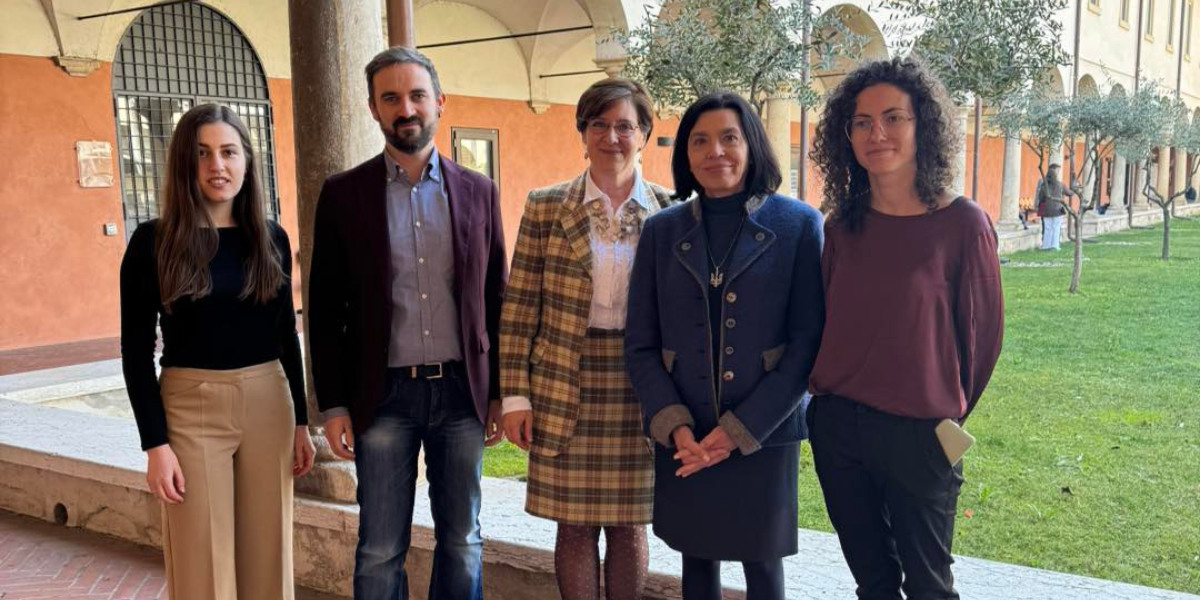
The initiative is promoted by Professors Daniele Artoni and Anna Giust from our department, and by our doctoral students Diana Bota and Khrystyna Yordan.

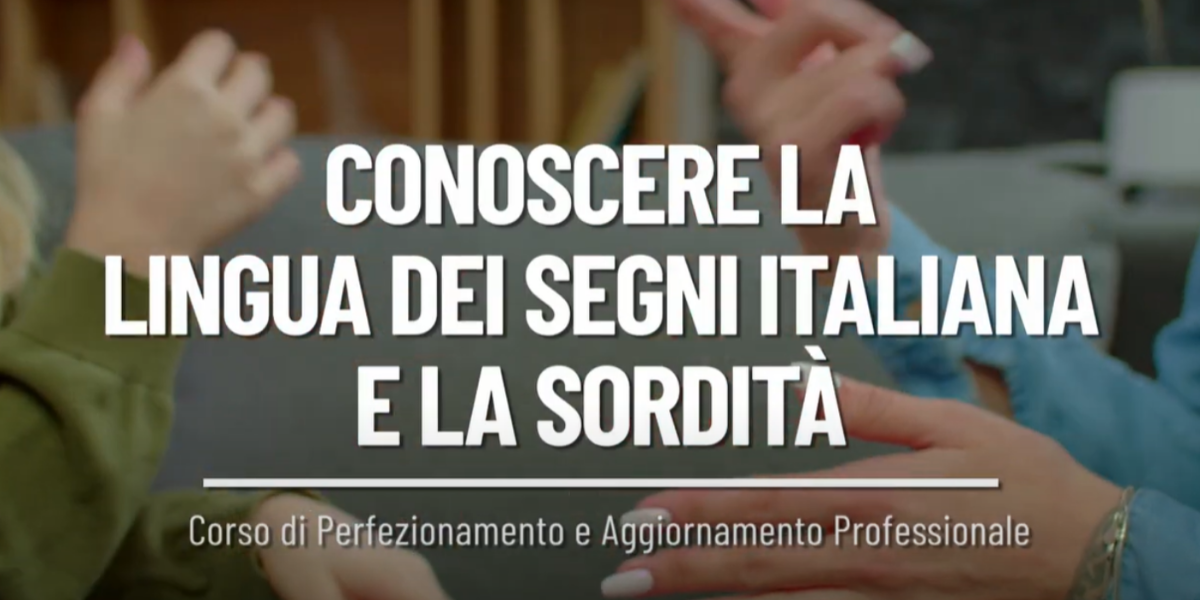
Understanding LIS (Italian sign language) and deafness: an introductory course

Registrations are now open for “Understanding LIS (Italian sign language) and deafness: an introductory course”, an advanced and professional development course organized by the Department of Foreign Languages and Literatures. It is open to all those who work with deaf individuals or want to acquire some basic knowledge about deafness and sign language for personal or professional reasons.
The seminar will allow participants to acquire:

  • basic theoretical and practical competence in the Italian sign language (LIS),
  • key knowledge about communicative strategies while interacting with deaf individuals,
  • important information about tactile Italian sign language (LIST) and deafblindness.

The traning will also include the knowledge of some important features of Deaf culture and of some key pedagogical-educational needs of deaf students, beginning with the analysis of their familiar and linguistic background.

The course will last three months, from march to may 2025, and will be in a face-to-face modality. During the sessions, the participants will practice both production and comprehension skills. Registration is open until February 18, 2025, and more details can be found here. A video-presentation of the course with LIS translation is available below.

The tenth episode of Inclusioni is online

The tenth episode of Inclusioni, the podcast channel of the Department of Foreign Languages and Literatures in collaboration with Fuori Aula Network, is now available on major podcast platforms. This episode will deepen the discussion of inclusion and accessibility explored in the previous episode with two educators who address these topics from different, interdisciplinary perspectives: Gerhard Lauer, professor of Book Studies at the Johannes Gutenberg University of Mainz, and Shulamit Almog, professor of law at the University of Haifa. Both guests are part of the Advisory Board for the Excellence Project “Inclusive Humanities: Perspectives for Development in the Research and Teaching of Foreign Languages and Literatures”.

Inclusion and accessibility are two complex terms: can how we define them within the contemporary debate surrounding them? Do digital tools facilitate inclusion or do they create new learning inequalities? Are you familiar with intersectionality and DEI principles? Finally, in what ways can children be included in political decisionmaking processes that affect them?

The tenth episode is in English and led by Giovanni Tallarico.

Happy listening!

The ninth episode of Inclusioni is online

The ninth episode of Inclusioni, the podcast channel of the Department of Foreign Languages and Literatures in collaboration with Fuori Aula Network, is now available on major podcast platforms. This episode, entitled “Inclusion and accessibility today”, highlights the reflections and experiences of two Italian educators who have been involved with the inclusion of persons with disabilities and the accessibility of tools developed for their needs.

What does inclusion mean today? What is the Charter of Solfagnano on the Rights of Persons with Disabilities? Do you know what “inclusive guides” are?

The host address these topics with Anna Cardinaletti, professor of Glottology and Linguistics at the University Ca’ Foscari in Venice, and Elena di Giovanni, professor of English language, translation, and linguistics at the University of Macerata. Both guests are part of the Advisory Board for the Excellence Project “Inclusive Humanities: Perspectives for Development in the Research and Teaching of Foreign Languages and Literatures”.

The interview is led by Giovanni Tallarico, Associate Professor of French language, translation, and linguistics in the Department of Foreign Languages and Literatures, and leading author for the channel, Inclusioni.
Happy listening!

“In principio era la Rupe” performs in Pavia

Due attori di teatro a rotelle recitano sul palco

On Sunday, February 9, 2025, the student group Teatro a Rotelle successfully performed at the Cesare Volta Theatre in Pavia with the production “In principio era la Rupe” (In the Beginning There Was the Cliff). Directed by Nicoletta Vicentini and Jana Karšaiová, the performance was organized by the Pavia volunteers’ group of Terre des Hommes Italia and offered free admission. The event’s primary aim was to promote inclusion, participation, and self-exploration of one’s own abilities through the powerful medium of theatre.